Al-Ramzi: Measuring particle mass alone is not enough to understand exposure to them... and their surface area is an important indicator.
Scientific participation in the «AirAware» network session at the State of Palestine pavilion during COP31
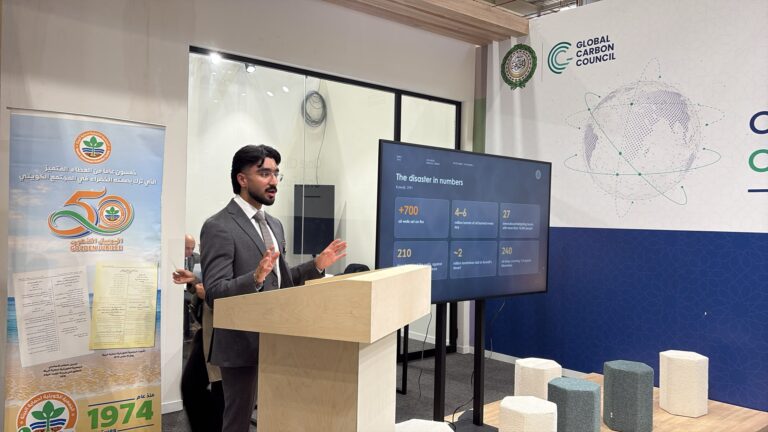
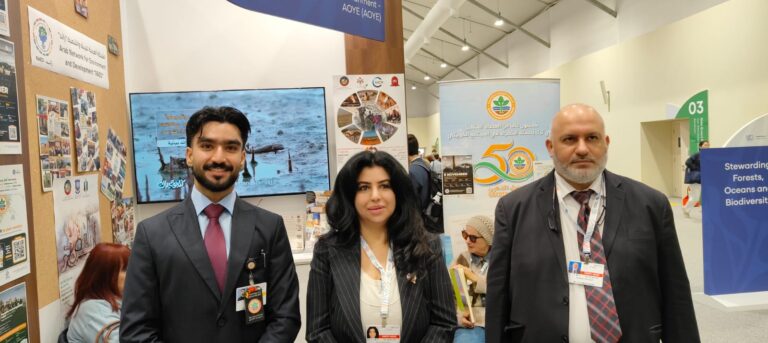
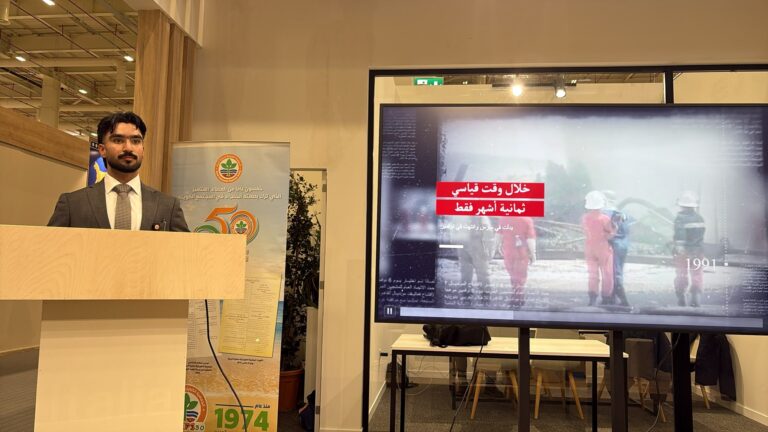
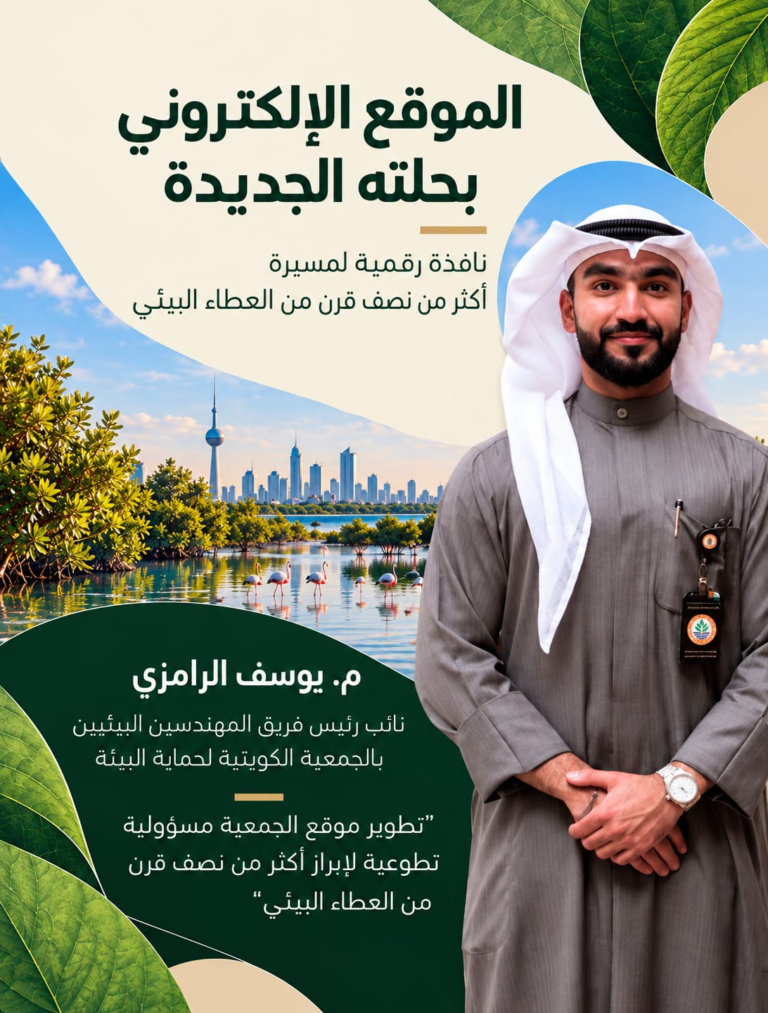
The head of the Kuwait Environment Protection Society delegation and official spokesperson for the Kuwaiti Environmental Engineers team, Engineer Yousef Al-Ramzi, participated as a speaker in the session «The First Smart and Community-Based Air Quality Monitoring System in Palestine,» which was held in the State of Palestine’s pavilion in the Blue Zone during the COP31 climate conference in Antalya, Turkey. During the session, the «AirAware» network presented its experience as one of the success stories of the Global Environment Facility’s Small Grants Programme (GEF SGP).
The session, held on November 14, featured engineers Tawfiq Saleh and Mohammed Shreim, along with Al-Ramzi, and highlighted the experience of community monitoring of air quality, and the importance of employing smart technologies and scientific knowledge in promoting community participation and understanding of air pollution issues.
Al-Ramzi explained that during his participation, he reviewed his research published in the journal «Environmental Pollution» in 2025 on the surface area of particles deposited in the lungs, indicating that the presentation focused on the importance of looking at the characteristics of the particles when assessing exposure to them, and not being satisfied with measuring their mass alone.
He added that the scientific message addressed in the presentation, which is that «mass is not the dose,» aims to simplify the difference between the amount of mass of airborne particles and their characteristics related to exposure, explaining that smaller particles can represent a larger total surface area when comparing equal masses, and that studying the surface area deposited in the lungs adds an important dimension to understanding this exposure.
He noted that the presentation also addressed black carbon and its connection to health and climate issues, highlighting the importance of linking efforts to improve air quality with climate action, and developing awareness tools that help the public understand the implications of environmental measurements and their relationship to their daily lives.
Al-Ramzi stressed that the «AirAware» experience opens the door to discussing the role of society in monitoring air quality, and the importance of making information available in an understandable way that supports awareness and participation, noting that cooperation between researchers, specialists and community initiatives contributes to employing research results to serve environmental work.
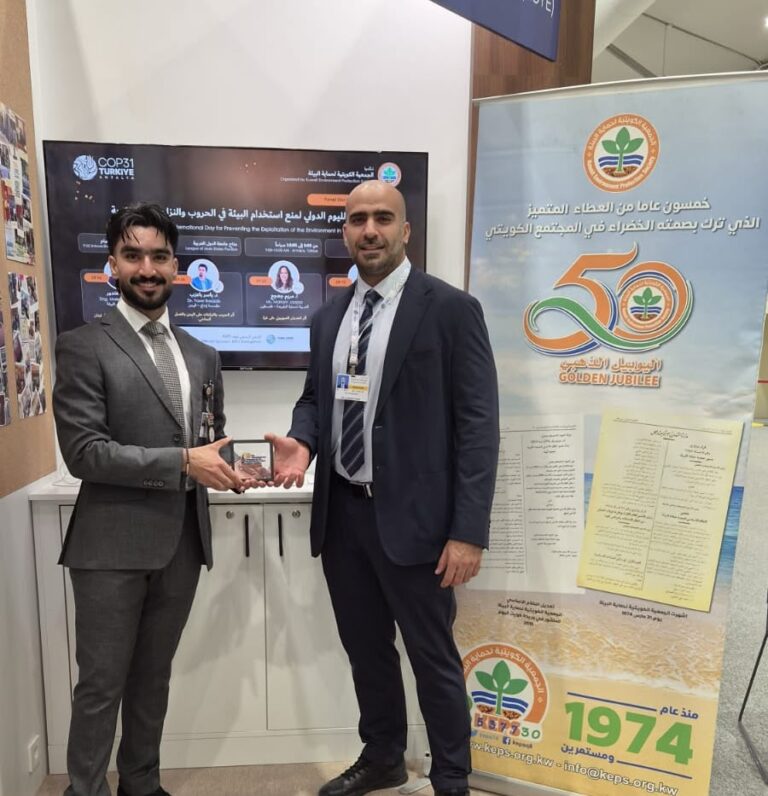
He explained that the association’s participation in this session reflects its interest in highlighting the scientific contributions of its members, exchanging experiences with Arab initiatives, and enhancing communication between civil society organizations and entities working in monitoring and scientific research.
Al-Ramzi concluded by emphasizing the association’s keenness to leverage its presence at the climate conference to showcase Kuwaiti expertise, benefit from regional experiences, and build cooperative relationships that support air quality awareness and expand community participation in environmental protection.