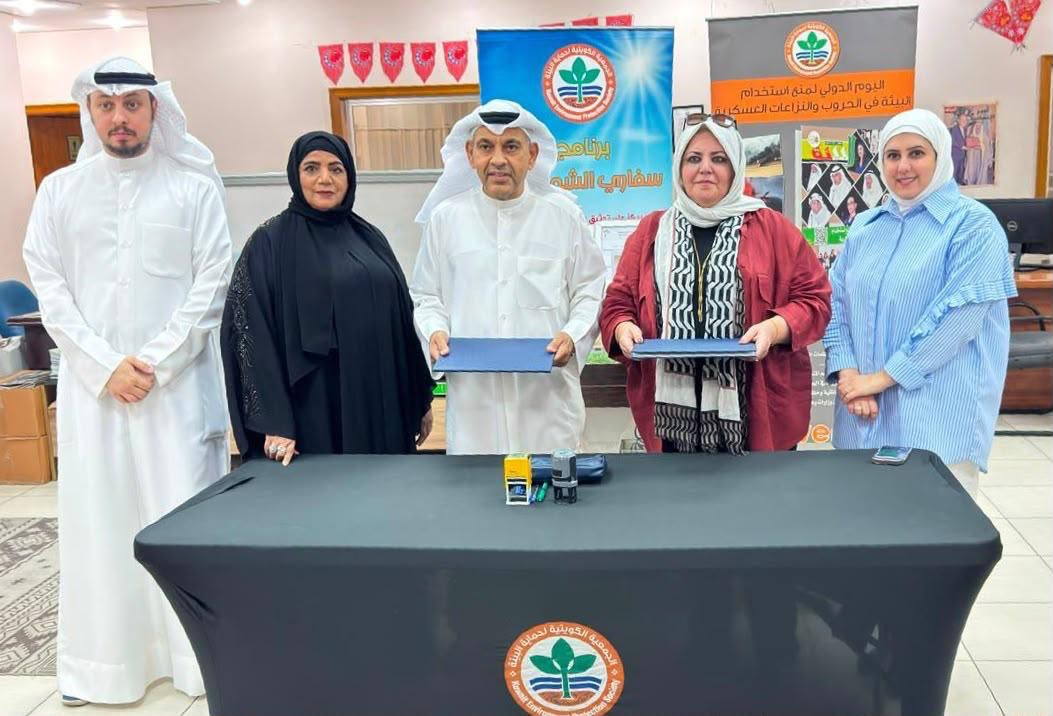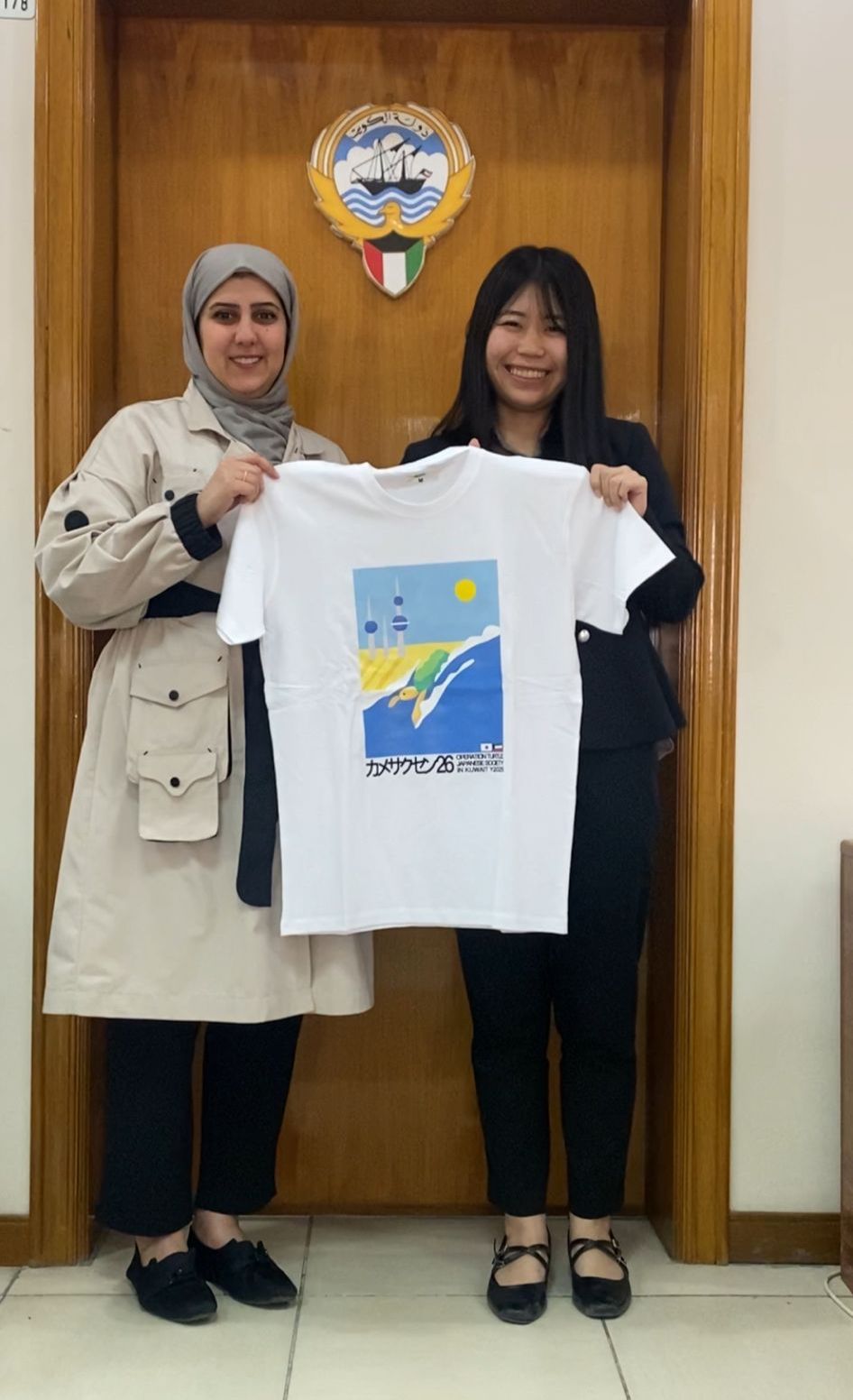
Janan Behzad, Secretary General and Director of Programs and Activities at the Kuwaiti Society for Environmental Protection, confirmed that the visit of Ms. Nimoto Mikako, a researcher at the Japanese Embassy, to the Society aimed to coordinate and prepare for the 26th annual "Sea Turtle" cleanup campaign at Kuwait Towers beach, scheduled for Friday, November 8th. The campaign is organized by the Society in cooperation with the Embassy and the Japanese Society, with the participation of several government agencies, civil society organizations, and students from schools participating in the 15th cycle of the Green Schools Program for the current academic year. In a press statement following the meeting with the Japanese Embassy representative, Behzad explained that "the sea turtle rescue campaign aims to raise environmental awareness about the importance of preserving endangered species and protecting natural habitats on the Kuwaiti coast." She added that "this initiative is part of the efforts undertaken by civil society to support environmental sustainability and protect biodiversity, highlighting the historical and environmental importance of sea turtles in the Arabian Gulf." She stated that “the campaign aims to encourage community participation in preserving marine life, inviting volunteers, citizens, and residents to participate in field activities that include cleaning beaches, monitoring turtle nests, and raising awareness about the importance of the coastal ecosystem.” She noted that «this initiative exemplifies international cooperation between the Kuwaiti Society, the Embassy, and the Japanese Society in the fields of environment, education, and volunteering, reflecting both parties» commitment to supporting the Sustainable Development Goals and protecting marine life for future generations.“ She pointed out that ”last year’s event saw the participation of approximately 1,000 volunteers, reinforcing its awareness-raising objectives of instilling the values of volunteering and environmental community engagement in the country among citizens and residents.“ In the same context, she explained that ”historical records indicate the presence of sea turtles in the region for more than five thousand years, appearing in Dilmun seal inscriptions made by the ancient inhabitants of Dilmun between Kuwait and Bahrain, reflecting the deep relationship between humans and the marine environment in this region.“ The Secretary-General of the Kuwait Environment Protection Society highlighted the types of turtles found in Kuwait, stating, ”The Kuwaiti environment is home to several turtle species, including the green turtle, loggerhead turtle, hawksbill turtle, and leatherback turtle. However, urban development and changes in coastal geomorphology over recent decades, coupled with the damage caused by the Gulf War and oil spills, have led to a decline in natural nesting sites and the degradation of coastal habitats upon which these creatures depend.“ Janan Behzad explained, ”Recent environmental studies have confirmed that green turtles are beginning to recover their nesting activity at rates close to those before the environmental damage, while hawksbill turtles still face challenges in their natural hatching rates. Nevertheless, the reappearance of turtles in Kuwaiti territorial waters is a positive indicator of the recovery of the marine environment in the northern Gulf, thanks to ongoing local and international efforts in the field of environmental protection.“.