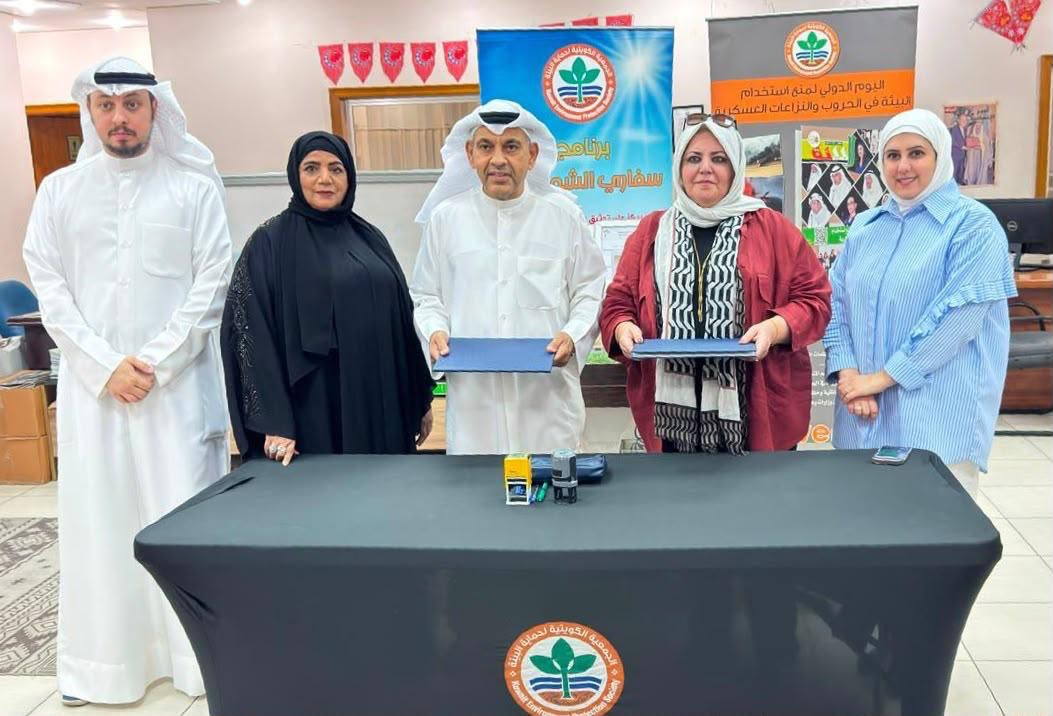

Dr. Wajdan Al-Aqab, President of the Kuwait Environment Protection Society, praised the efforts of His Excellency the Secretary-General of the Arab Towns Organization, Engineer Abdul Rahman Hisham Al-Asfour, in renewing cooperation with the Society and coordinating to hold various environmental events in the field of cities, supporting and endorsing the role of civil society institutions in this field, as well as opening areas of cooperation with the Society in many events and activities, the latest of which was the Organization’s participation in the events of the International Day for Disaster Risk Reduction, which was recently organized by the Society in cooperation with the Red Crescent Society.
Dr. Wajdan Al-Aqab called for “investing the energy of the youth in serving the community.” This came during her participation in the “Quality of Life in Cities” conference and the closing of Urban October and World Cities Day, which was organized by the Arab Towns Organization and UN-Habitat for Kuwait and the Arabian Gulf.
At the beginning of her speech, Dr. Al-Aqab announced her solidarity with the brothers in the Gaza Strip and what they are witnessing in terms of genocide, saying, “My speech is like any speech during the past 20 days. The preparations and arrangements are made in advance, but during the preparation, we find ourselves, because of the events that our people in Gaza are going through now, having these speeches unfortunately overshadowed and taken on a different focus, but in the same context of work.” She added, “We are very much in solidarity with our brothers in Gaza, and if we talk today about cities, humanizing cities, and improving life in them, we find that Gaza has fallen below zero, but we hope to God that this issue will be resolved sooner rather than later, one way or another.”.
Dr. Al-Aqab emphasized, “Our role as civil society organizations or government agencies in improving the urban environment comes through encouraging the existence of sustainable cities that have the ability to safely recycle the waste present in the city, and that there be sustainable consumption of electricity and water, and that there be a high level of environmental culture and awareness among the different segments of society.”
She explained that “awareness is one of the most important aspects carried out by the Kuwait Environment Protection Society and many public benefit associations, as it is one of their basic roles in serving the community,“ noting that ”sustainable cities, or those that encourage improving the quality of life in them, are found to achieve very high indicators when implementing the seventeen Sustainable Development Goals. There are many models around the world in the possibility of applying the standards of sustainable cities with a high standard of living, and through the application of the Sustainable Development Goals that are consistent with the quality of life program in cities.”.
She continued: “Our role as civil society organizations begins with raising awareness among various segments of society, as well as on the educational side through the “Green Schools” program, which the society has been organizing annually for 13 years. It addresses more than one environmental theme and element that helps students and young people of all ages to look forward to each of them having a green footprint in their community and a green footprint in their city. But on the other hand, if the student or young person has the information and correct knowledge, unfortunately we are confronted with a different reality, that the child needs there to be tools available in the community that contribute to his exercise of his role, and he needs there to be clubs that receive him that are prepared and of a degree of efficiency that invest all his energy in serving the community through the environmental aspect.”.
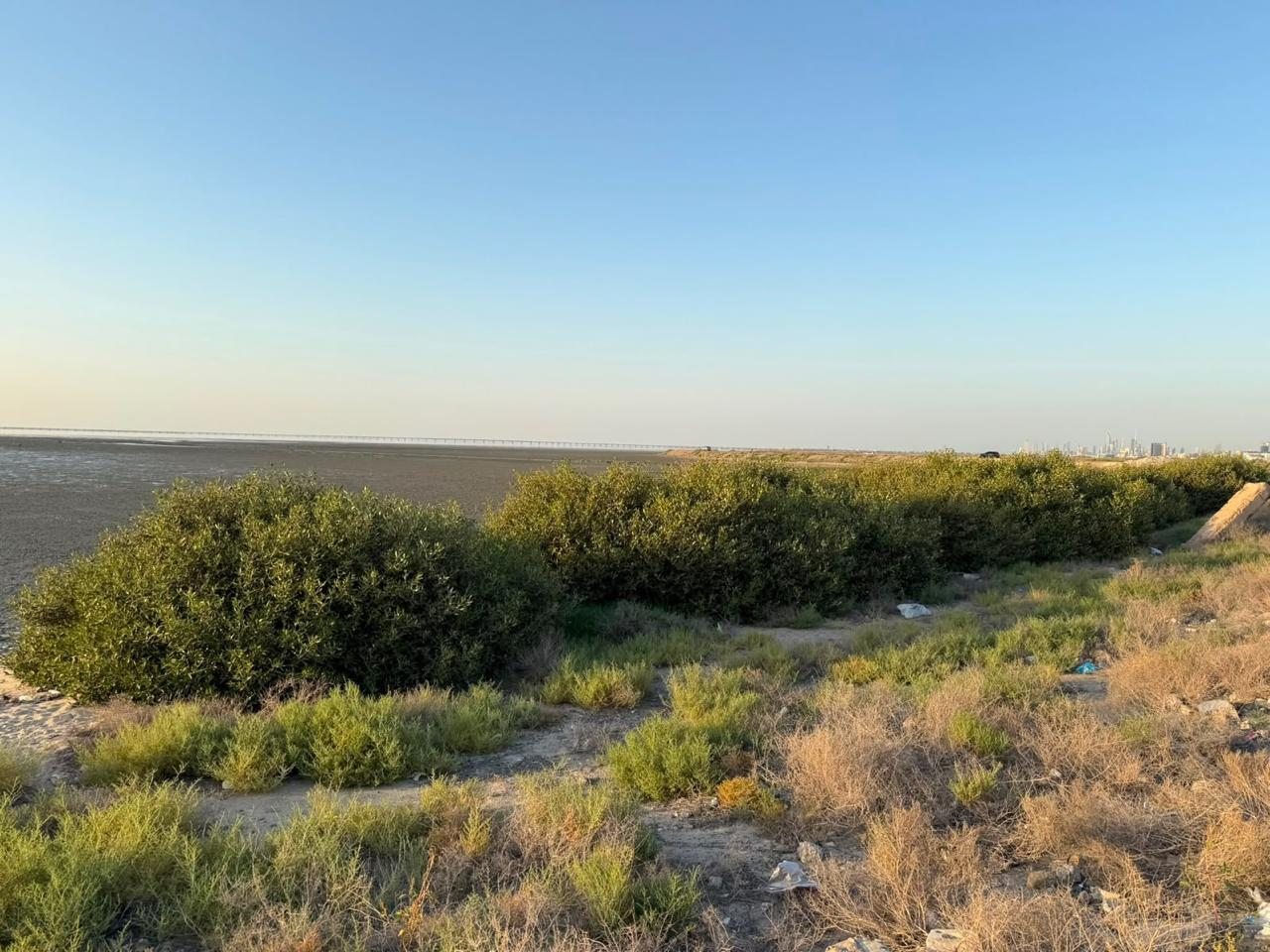
Dr. Wajdan Al-Aqab pointed out, “We need to increase the percentage of green spaces, as their presence improves the psyche and gives people the opportunity to do sports, the simplest of which is walking. Green spaces also contribute environmentally to attracting wildlife such as different types of birds.”.
Referring to healthy cities, Dr. Al-Aqab said: “In Kuwait, we have wonderful experiences such as the healthy cities that have been announced, including Yarmouk Health City, Al-Shaab, and Dasma. Thus, the subject has become clear, available, and easy to apply to most areas in the State of Kuwait and beyond. The existence of a successful experience means that its application is also successful and easy, focusing on the dimensions that should be emphasized through an awareness and training program, such as the science curriculum in schools, which includes climate change and global warming. Therefore, the society conducted training courses for science teachers in the Ministry of Education in the six governorates to prepare them to present this science, and a climate literacy program to increase community knowledge of people’s roles towards their environment and the steps required of them to achieve it.”.
Dr. Wajdan Al-Aqab noted some of the environmental problems that were discussed in the final statement of the Arab Environment Forum, which was organized a few days ago in the Sultanate of Oman. The discussion took place over two days and focused on biodiversity, which is also what we need in smart cities, and the importance of dealing with plastic pollution and its long-term effects on cities and the environment in general, as well as climate change.
Dr. Al-Aqab concluded: “We, as the Arab world, face greater challenges than other countries, namely wars and conflicts. Despite the existence of the International Day for Preventing the Exploitation of the Environment in War and Armed Conflict (November 6), which was requested by the society and submitted to the Ministry of Foreign Affairs, and within 6 months this day was adopted by the United Nations to prevent the exploitation of the environment in wars and armed conflicts, these wars and conflicts have an impact on the Arab world, as they disrupt us, hinder us, and cause us to regress. But our efforts today are to have better cities and a better quality of life in cities. We must be keen to inform the world about the importance of such international days, as well as October 13, which is the International Day for Disaster Risk Reduction.”.