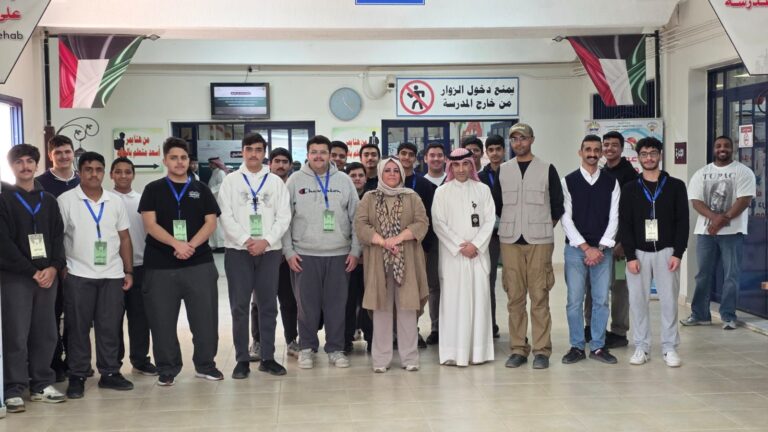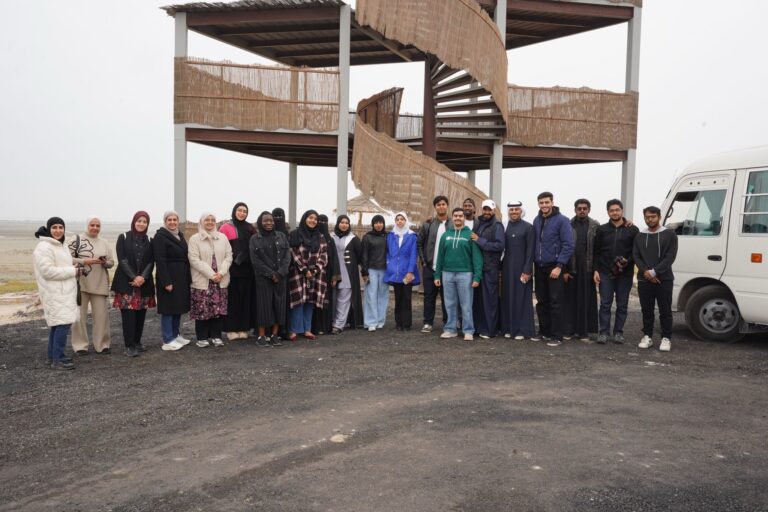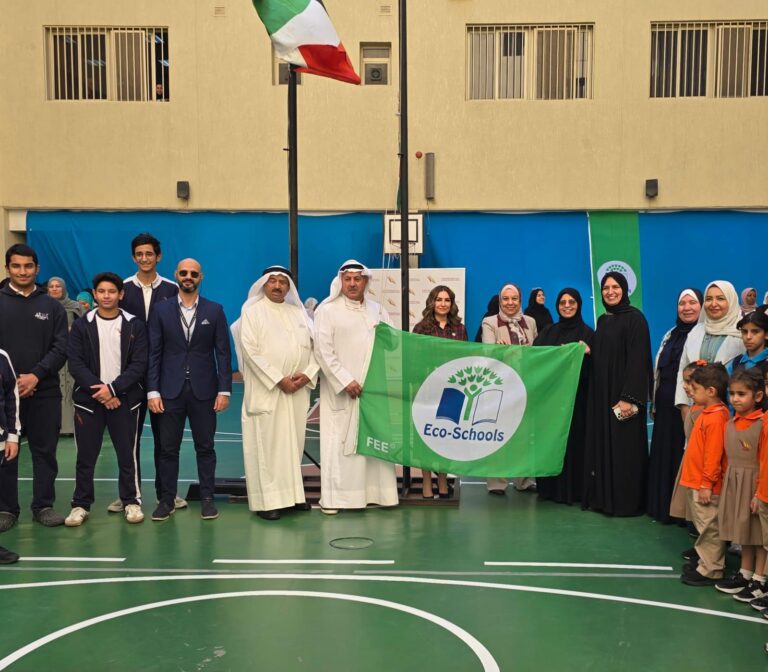
The Sabah Al-Ahmad Center for Environmental Training and the “Green Schools” program of the Kuwait Environment Protection Society, in cooperation with the Ministry of Education, organized an experts’ workshop to discuss the most important issues and topics related to climate change, with the participation of 170 male and female teachers, in preparation for the COP 28 climate summit scheduled to be held in the United Arab Emirates.
Janan Behzad, Secretary General and Director of Programs and Activities at the Environment Society, noted that “the workshop was opened with an introduction to climate change, followed by the distribution of a questionnaire to the participants and the collection of opinions on the issue of climate change and the role of the teacher in facing the challenges,” stressing that the workshop included 7 lectures presented by a select group of Kuwaiti experts concerned with the field of climate change and environmental education.
Announcing that Dr. Ghanem Al-Sulaimani addressed in his lecture “The role of the Ministry of Education in supporting educational and cultural activities to raise awareness of environmental and scientific topics such as climate change,” while Dr. Hassan Dashti presented a lecture on climate change (concept, challenges and solutions), as well as a lecture on “Water resources in arid regions in light of climate change: adaptation and solutions,” which was presented by Dr. Hamed Eidan.
Behzad explained that “the lecture series continued with a lecture on “Identifying high-risk areas for flash floods and floods in light of global climate change,” presented by Dr. Zahra Al-Ali. Dr. Nawaf Al-Mutairi presented a lecture on the environmental and economic impact of rising sea levels on the State of Kuwait, in addition to the impact of the seasons on bird migration patterns, during which Dr. Nasser Al-Din Asadullah addressed this biological aspect. Then there was a session for asking questions and inquiries, discussing recommendations and proposals, and formulating them.”.
In a related context, and on the sidelines of the workshop, Jinan Behzad explained that the link between climate change and education was a recurring theme during the workshop, noting that “climate change and education are two closely interconnected fields. Climate change represents a significant challenge for the entire world and affects a wide range of issues, including the environment, the economy, and public health. If climate change is addressed effectively, it can have a positive impact on the environment and societies. Education must be integrated into efforts to combat climate change and preserve the planet for future generations.”.
“Education is a powerful tool to empower individuals and communities to address environmental challenges such as climate change. Environmental education is an educational process aimed at increasing awareness and understanding of the environment and its issues, and promoting sustainable environmental behaviors and practices. Schools and universities can raise awareness of climate change issues and their impact on the environment and society. It is difficult to separate science today from the reality experienced by students, especially in areas affected by the effects of climate change. Schools and universities can teach climate change concepts, related science, and the importance of taking action to reduce its impacts.”.
The Kuwait Environment Protection Society considered that “the general goal of environmental education is to enable individuals to become responsible environmental citizens committed to preserving the environment and contributing to achieving sustainable development, as education can provide individuals with the skills necessary to deal with climate change, such as understanding sustainability methods, preserving natural resources, developing environmental technologies, improving infrastructure to receive changes, training to confront them, and enabling the most vulnerable communities to deal with them.”.
Janan Behzad pointed out that “universities and educational institutions play a crucial role in supporting research and innovation in combating climate change and developing new technologies and solutions. Harnessing youth efforts in combating climate change stems from awareness of the issue and the need for community participation in environmental projects and initiatives to encourage sustainable behavior. Sustainable behavior programs can be implemented in school and university buildings, and students can be trained to rationalize resource consumption and rely on shared transportation to reduce the environmental footprint. This also has a direct benefit on air quality and traffic congestion.”.
The Secretary-General of the Environmental Protection Society added, “In recent years, there has been a growing demand for climate change and sustainability topics in the Green Schools program due to the urgent need to support educational curricula to raise awareness of climate change issues and the necessity of integrating sustainability into education. Despite the increasing concern about environmental and climatic impacts worldwide, and our direct experience in Kuwait of rising temperatures and the region's exposure to extreme dust storms and unprecedented rainfall, the attention given to climate change issues in our national curriculum plans is very weak. Climate change is often taught in various subjects such as science, geography, and environmental studies.”.