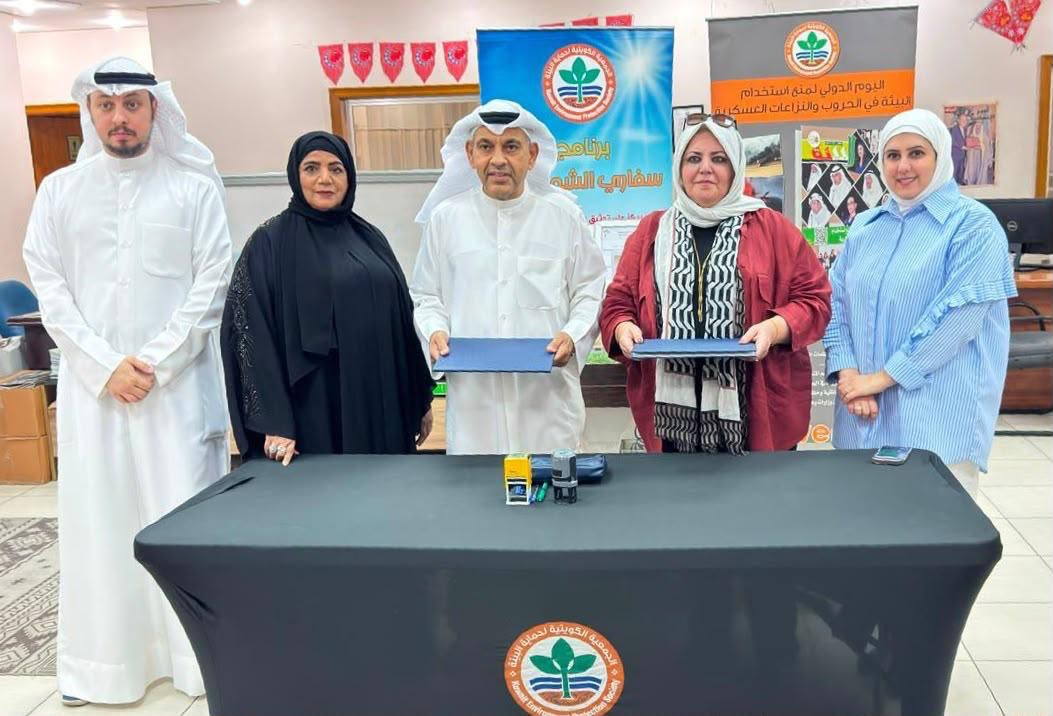
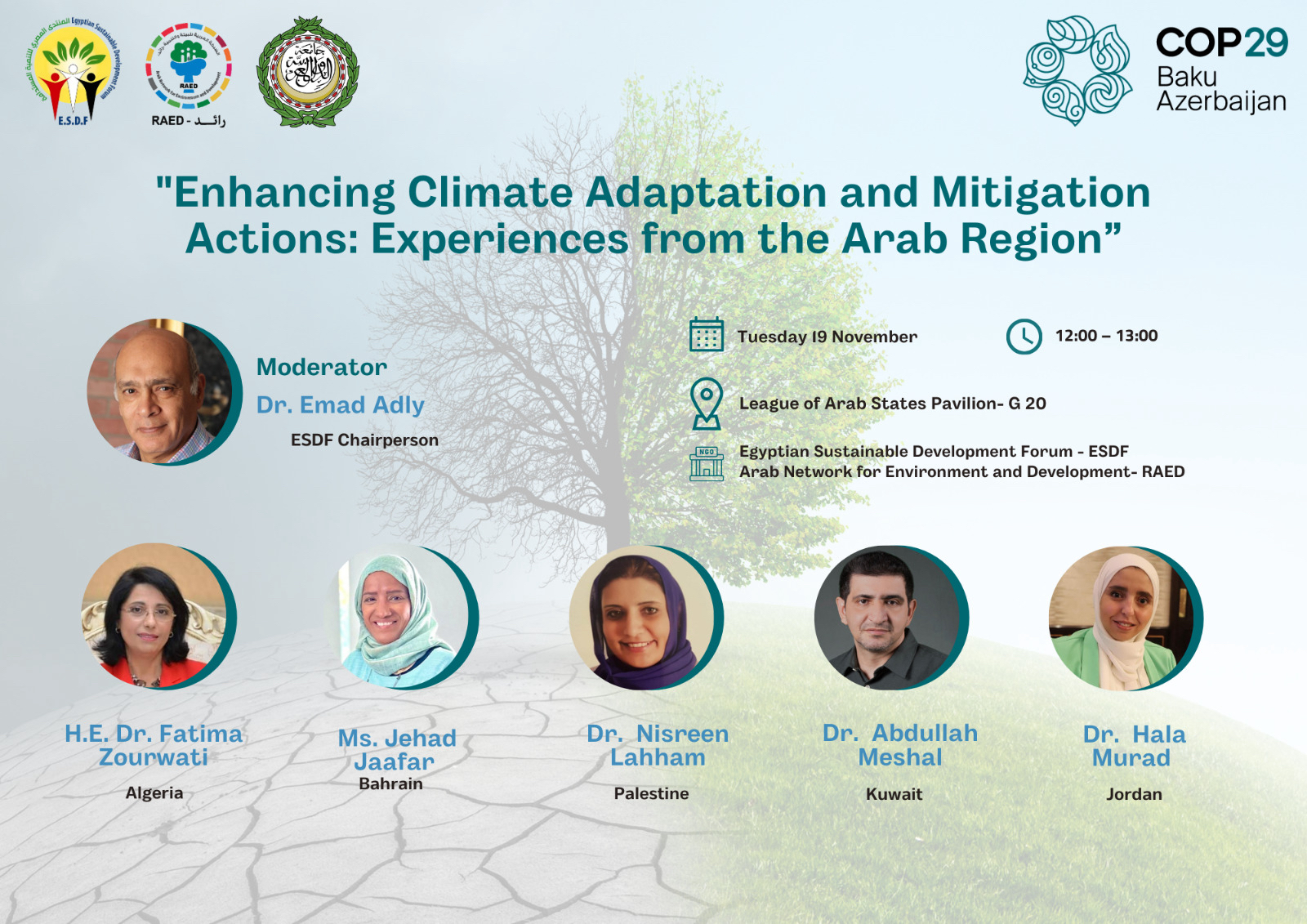
The Kuwaiti Society for Environmental Protection continued to present its scientific program, packed with diverse activities, in the Blue Zone designated for governments and international environmental organizations accredited by the United Nations Environment Programme as observers, as part of its participation in the 29th session of the Conference of the Parties to the United Nations Framework Convention on Climate Change (COP29), currently being held in the Azerbaijani capital, Baku.
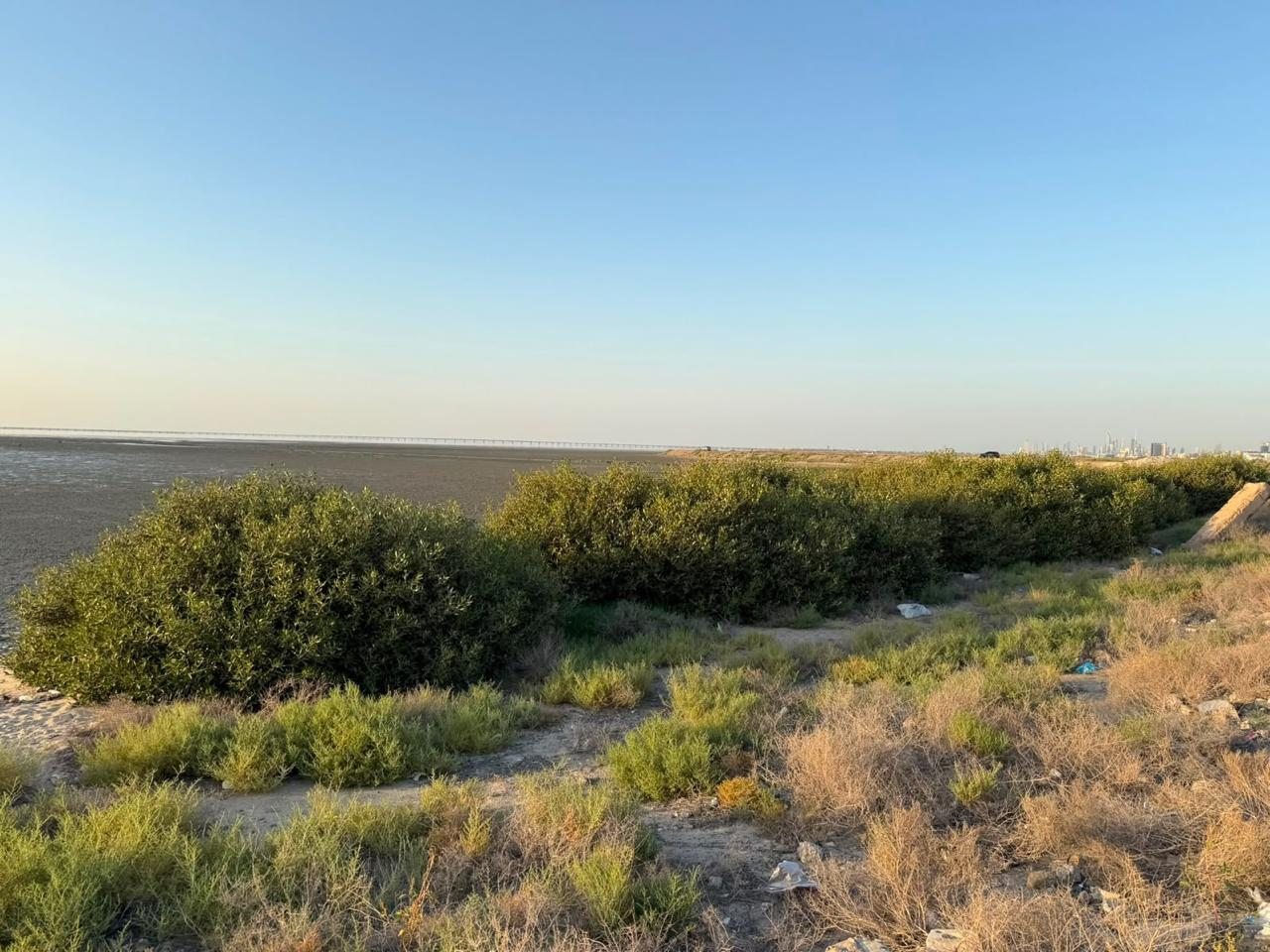
In this context, the association participated with a scientific lecture in the Arab League pavilion, in the presence of an academic, governmental and civil crowd, from the representatives of the participating countries. The lecture was presented by the association’s representative, Dr. Meshaal Abdullah, and dealt with a scientific and field study on “Rehabilitating natural plants for water sustainability and food security.” The main idea was that rehabilitating natural lands increases the percentage of pastures, which will reduce the pressure on the production of fodder, which consumes a lot of water.
Dr. Meshaal Abdullah added: “We conducted the study and it became clear that if we rehabilitate just 10% of the area of the State of Kuwait that was used as pastures, this will save the water wasted in cultivating fodder. If the amount of water we consume in fodder production increases, the cost of food security will rise in proportion to the increased cost of caring for and raising animals or stock. This method will also make available new and larger areas on farms because of the reduction in fodder production, which utilizes 60% of the existing farm area, which can be used to produce other plant crops that increase livestock production. Plant production will also increase significantly. In this way, we will have food and water security and consume a small amount of water because we have relied on rehabilitating natural plants that do not require large amounts of water in light of climate change. Because over time and with these changes, we will need other methods to help us. This is the link between water and food, and the ecosystem is one of the natural solutions.”.