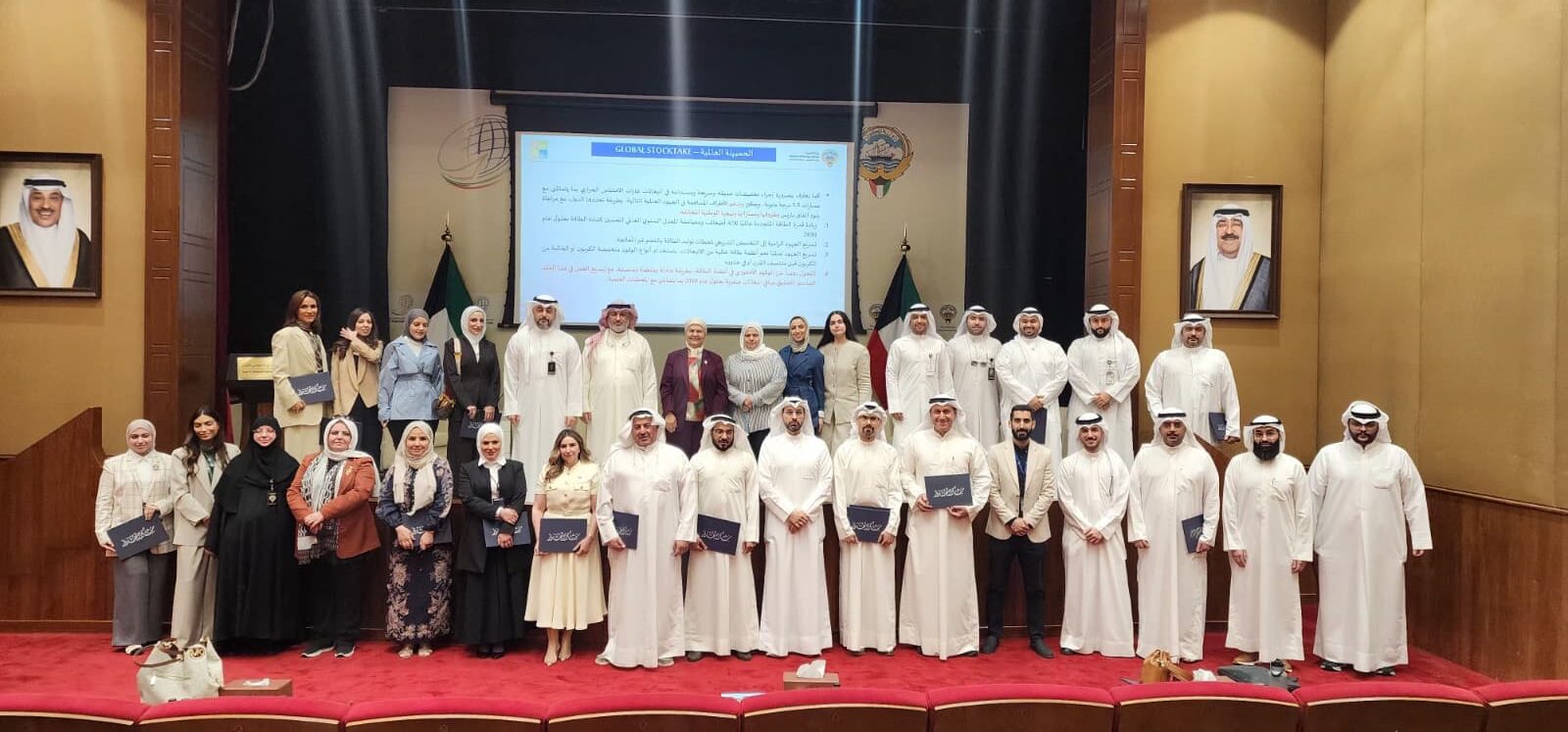
The Kuwaiti Society for Environmental Protection highlighted the importance of preparing a second tier of Kuwaiti negotiators from various government entities involved in the United Nations Framework Convention on Climate Change (UNFCCC). Dr. Wajdan Al-Aqab, the Society's president, emphasized that the first training course for national negotiators on the UNFCCC, organized by the Environment Public Authority at the Saud Al-Nasser Kuwaiti Diplomatic Institute, lays the foundation for transferring expertise to a second generation of young Kuwaiti negotiators. Dr. Al-Aqab commended the commitment of Her Excellency Dr. Reem Ghazi Saud Al-Faleej, Minister of State for Development and Sustainability Affairs in Kuwait, and Nouf Behbehani, Director General of the Environment Public Authority, to advancing national environmental personnel towards achieving the highest standards of quality and efficiency. She added that the Society also praised the organizational efforts of the Saud Al-Nasser Kuwaiti Diplomatic Institute in holding the course under the generous patronage of the Kuwaiti Ministry of Foreign Affairs. She stated, “The course provided an introduction to the nature of negotiations and the texts of treaties, agreements, and resolutions related to climate change. It offered a behind-the-scenes look at climate summits, transforming them into a body of knowledge summarizing the efforts of the Kuwaiti negotiating team over the years.” She added, “We anticipate this will pave the way for an advanced course that includes desk exercises and reviews of various scenarios, allowing participants to engage practically and qualify as national negotiators representing the State of Kuwait from their respective workplaces in different government entities.” She explained that “organizing such a course has been a pressing need for years. Having a national team of negotiators ensures Kuwait’s rights are protected through participation in the framework meetings of climate summits, which are numerous, demanding, and extend for hours daily, often until the early morning.” She pointed out that “the climate summit lasts two weeks, during which meetings are held in multiple locations. The presence of negotiators directly safeguards Kuwait’s rights and prevents the passage of decisions that could negatively impact Kuwaiti development, the economy, and the environment.” She said, “Given the need for national negotiators to accumulate experience and practice to effectively perform their national duty, it is essential to emphasize the importance of supporting negotiators representing them and their sectors by not terminating their participation and replacing them, but rather by enhancing it through mentoring a second tier of negotiators to acquire the various skills required for this role under the supervision of seasoned negotiators.” Dr. Al-Aqab suggested, “There is no harm in including trainees within the negotiation team to receive better guidance and more effective practical training. This approach is the best investment in building national capacities to represent the State of Kuwait in international forums.” She commended “the efforts of the national negotiating team from all state entities, who presented a summary of their practical experiences in the field of negotiation in the form of lectures that encapsulated their experiences in the climate summit meeting halls.” She also commended Engineer Sharif Al-Khayyat's praise for the role of Kuwaiti civil society organizations at climate summits, particularly the Kuwaiti Society for Environmental Protection, the only organization accredited by the State of Kuwait under the Framework Convention on Climate Change (UNFCCC). The Society is present at climate summits in the Blue Zone, designated for governments and civil society organizations accredited by the United Nations and the UNFCCC. She emphasized the Society's commitment to ensuring its members attend these sessions to enhance their knowledge and skills, enabling them to achieve the necessary balance at climate summits and support the government's approach, which avoids harming the environment or hindering development. The Society consistently presents environmental issues and success stories that bolster Kuwait's position at these summits through side events and exhibits at its pavilion throughout the two-week summit.