The Kuwait Environment Protection Society considered that the illegal hunting of migratory birds, the encroachment on their habitats, and the threat to their routes negatively affect one of the most prominent components of wildlife and represent a disruption of the ecological balance in the country, calling for firmness in applying the law prohibiting hunting and punishing its violators.
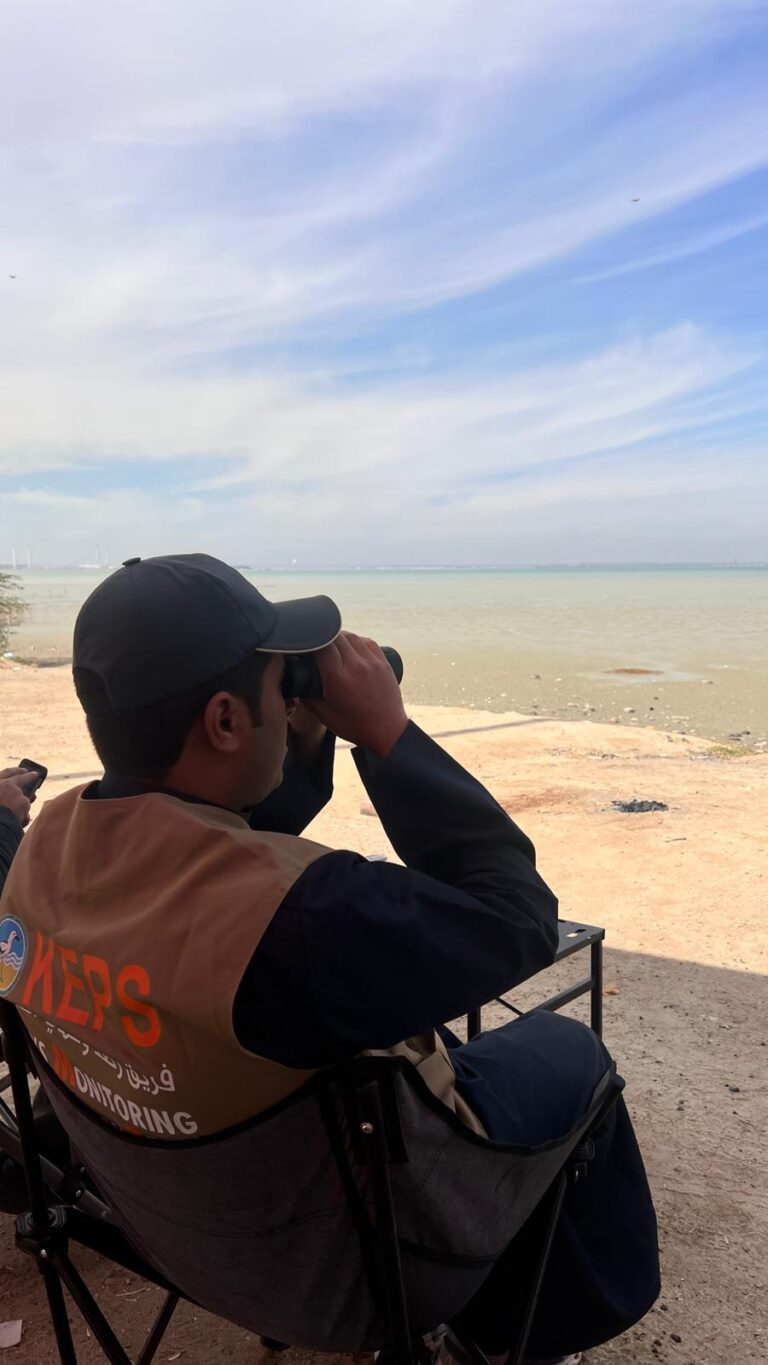
In the same context, Mohammed Shah, head of the bird monitoring and protection team at the association, spotted a female common cuckoo resting in the Sabah Al-Ahmad Nature Reserve while touring it, recovering from the hardship and effort she exerts during her spring migration and return to her homeland in the north, stressing that Kuwait is one of the most important and prominent migratory bird routes in the world.
Shah emphasized that this bird is known as a parasite on other birds' nests, as it does not bother to build nests and raise young, but rather resorts to the nests of other birds to raise young. He added: “The female common cuckoo attracts the attention of birdwatchers and observers with her behavior towards other nests, as she usually searches for a pair of birds, often birds that feed mainly on insects, such as warblers, that have finished building the nest and started laying eggs. They do not sit continuously on the eggs until they are complete. The female cuckoo lies in wait for the pair to leave the nest and seizes the opportunity to replace one of the eggs by throwing it out of the nest and laying her own egg in its place, then she leaves.”.
He explained that “the female common cuckoo continues to exhibit these behaviors. When the betrayed couple returns, they do not notice the difference and sit on the eggs until they hatch. Then the newly hatched cuckoo chick moves around the nest looking for other eggs or chicks, and gets rid of them by throwing them out by sticking its back to them and pushing them out of the nest to ensure that no one shares the food with it. Usually, these birds are much smaller than the cuckoo, and therefore they exert all their energy to silence the cuckoo chick’s cries, which continue to ask for food without being satisfied, thus exhausting the betrayed couple.”.
Mohammed Shah adds that he also witnessed this behavior during his visit to the Republic of Azerbaijan in August 2018, when he observed a small warbler feeding a large cuckoo chick. The difference was clear, as the cuckoo was three times the size of the warbler feeding it, and the chick kept making sounds as if it were crying to ask for food.