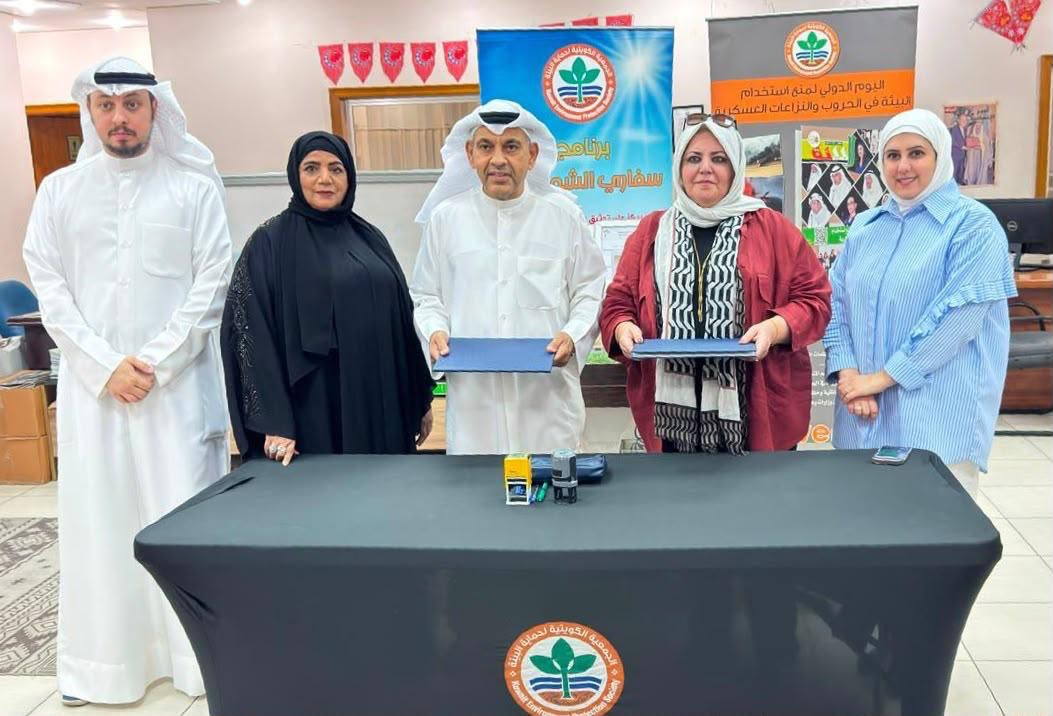
Nawaf Al-Muwail, supervisor of training programs at the Sabah Al-Ahmad Center for Environmental Training at the Kuwaiti Society for Environmental Protection, confirmed that 104 people participated in the survey to measure awareness of electronic waste, which was conducted in coordination and cooperation between the Kuwaiti Society for Environmental Protection, HSBC Bank Middle East Limited - Kuwait Branch, and Al-Hamra Real Estate Company, as part of the campaign to raise awareness about disposing of electronic waste.
Al-Muwail emphasized that “in this survey, which aims to measure consumer awareness among the public and measure knowledge about disposing of electronic waste, 10 separate questions were posed in Arabic and English to the public of Al Hamra Tower, including employees and visitors to the Al Hamra complex.” He added, “Participants were asked about methods of disposing of electronic waste, and the largest percentage of responses, at 32.7%, was sorting the waste for each device separately. The smallest percentage of participants answered that they store it at home or break it up and throw it in garbage containers. This was confirmed by participants in English with the same answers.”.
He added, “When participants were asked about their desire to know safe ways to dispose of electronic waste, a large majority strongly agreed that they wanted to know how to dispose of waste safely. Secondly, most participants agreed on the importance of knowing the correct way to dispose of damaged devices and electronics.” He noted, “In the question about disposing of electronic waste from old mobile phones and their accessories, most participants answered that they would keep them at home or recycle them and send them to designated places, and only a small number would throw them in the household waste bin. The level of awareness and knowledge of the appropriate ways to dispose of and recycle mobile phones was only 10% of the participants.”.
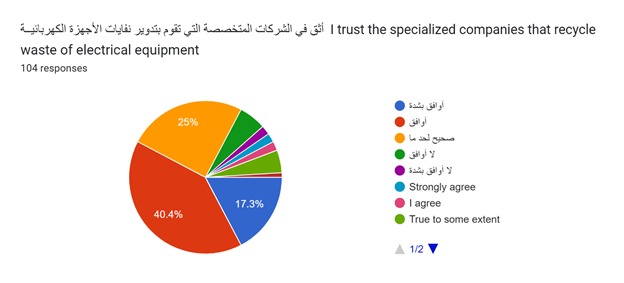
Al-Muwaile stated, “Participants answered the question, “What is the most common type of electronic waste you would like to dispose of?” as follows: wires, batteries and chargers, old mobile phones, computers and laptops and their accessories, and finally, CDs and flash drives. A large percentage of respondents strongly agreed to participate in an electronic waste collection campaign if such campaigns were available.” He added, “Regarding the question about participants” trust in specialized companies that develop electronic waste recycling, the responses ranged from somewhat agreeing to agreeing, while strong agreement was slightly less frequent. This indicates that participants need to further enhance their trust in companies that recycle electronic waste to achieve their goals in society.“ He emphasized, “In response to the question, ”Do you know the fate of waste in the State of Kuwait?” the majority answered ‘I don’t know,’ indicating a lack of consumer awareness about waste disposal, which will lead to poor consumption management and an increase in the production of various types of waste. The correct answer was ‘landfills,’ which was less frequently given. This was followed by the shocking answer that 21% of participants in Arabic answered ‘I don’t know.’” The English person replied that it burns, followed by someone who replied that it melts in the desert.”.
“Do you sort regularly at home?” 40% of participants answered yes and donate what they don’t need, followed by “Yes, I find a lot of household items that I don’t need,” while 9.6% answered that they throw what they don’t need in the trash, followed by ”No” with a percentage exceeding 8%.
Nawaf Al-Muwaile explained, “Many of the suggestions were excellent, simple, and practical ideas, such as establishing electronic waste collection points in cooperative societies in residential areas and intensifying awareness campaigns on how to dispose of electronic waste. Some participants emphasized the importance of adding this service to the municipality’s waste collection services and raising awareness about it, as well as providing larger containers for electronics and other categories in residential areas. There were also many suggestions that stressed raising awareness of the problem and its solutions through seminars in schools to increase students” knowledge and include this information in the educational curriculum.”.