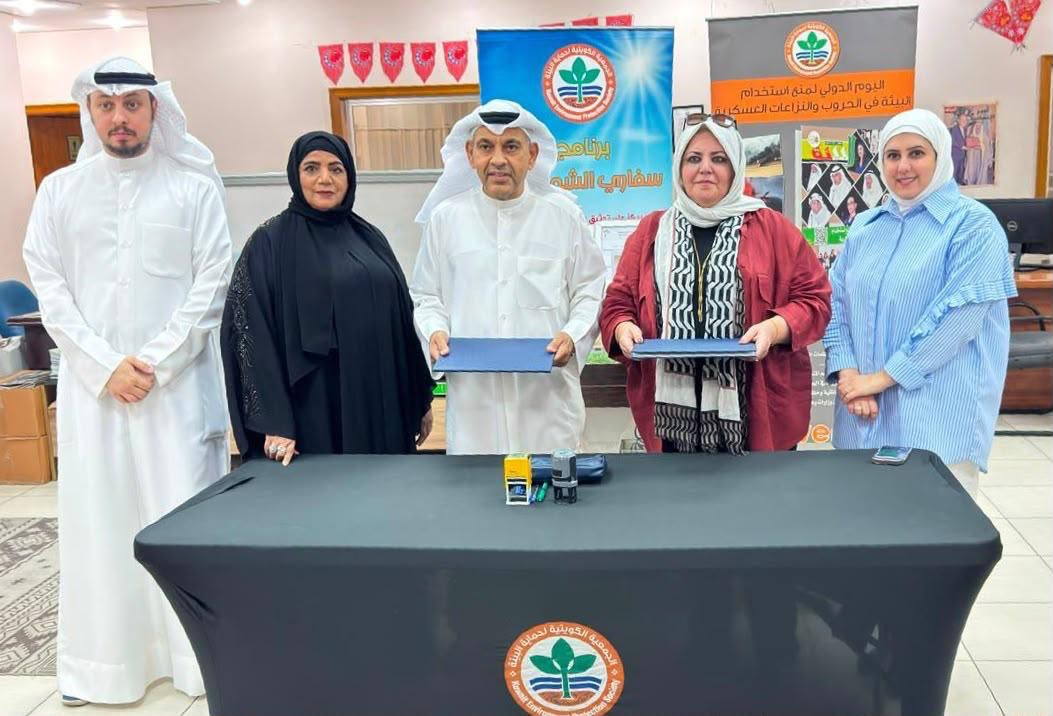
The Kuwaiti Society for Environmental Protection condemned the environmental violations and failure to follow environmental discipline standards during the national holidays, through violations committed by some against the various environments of the country in a clear violation of their safety and causing damage to them.
She said that “commitment to disciplined environmental behavior would protect the environment and its components, including natural habitats, wildlife, and environmental elements,” noting that the association had observed many violations and transgressions against the environment during the recent national celebrations. She added that “Kuwait is below the water poverty level, and during the national celebrations, quantities of water sufficient for 14,000 housing units for one day were wasted, according to what the Ministry of Electricity and Water had previously announced.” She explained that this waste is linked to many sectors, such as air and pressure on drainage networks, stressing the need to pay attention to preserving these resources and not wasting them during national holidays.
“During the national holidays season, every year we face a water war in the streets, which receives only widespread criticism without the law being applied to violators. It is worth mentioning that the law has set the penalty for wasting water in washing the street or washing cars and preserving water from waste at 500 Kuwaiti dinars, and it can be applied to wasteful people or work on enacting new laws that regulate the celebration of national holidays.”.
The host added: “The State of Kuwait suffers from water scarcity and faces severe pressure in water consumption. It relies on seawater desalination to meet the demand for fresh water. Article 2 of Environmental Protection Law No. 42 of 2014 stipulates that the provisions of the law apply to all public and private entities and individuals. Consuming fresh water economically based on environmental protection and not depleting natural resources is one of the basic principles of environmental knowledge, as water is the lifeblood of life. This is one of the challenges facing the State of Kuwait, especially with the increase in population and urban growth.”.
She explained that “the education system must focus on raising awareness of all the difficulties Kuwait faces in obtaining water, including the lack of freshwater sources and the ongoing need for seawater desalination. The cost of producing fresh water (the cost of producing 1,000 gallons of water is approximately six dinars, of which the citizen pays only 800 fils, while the general budget subsidizes 5.2 dinars per 1,000 gallons).” She pointed out that “in Kuwait, per capita water consumption is estimated at about 550 liters per day, which is more than double the average set by the United Nations, estimated at about 220 liters per person. While per capita water consumption in Kuwait is among the highest in the world, the water problem remains one of the greatest challenges globally, with approximately 884 million people worldwide lacking access to safe drinking water.”.
She explained, “Working to improve environmental behavior and promote environmental citizenship requires a change at the cultural and social level. The current behavior associated with national holidays raises fears of a disruption in behavior related to environmental culture. It is also noticeable how much waste is generated during national celebrations, especially plastic waste. Unfortunately, we see that celebrating for only two days has created a huge burden on the environment for years to come.”.
She emphasized that “seawater pollution from plastic, resulting from human waste on coastlines such as water bottles, party balloons, plastic bags, and other consumer waste containing materials that do not decompose for many years, is a major concern. Balloons are among the most dangerous types of waste that can enter the marine environment. Although releasing a balloon takes only moments, it can take hundreds of years for it to decompose. Over time, these balloon fragments become smaller and smaller, eventually turning into microplastics. Even biodegradable balloons can take six months to four years to decompose, and in all cases, they harm marine life because they are often ingested by animals.”.
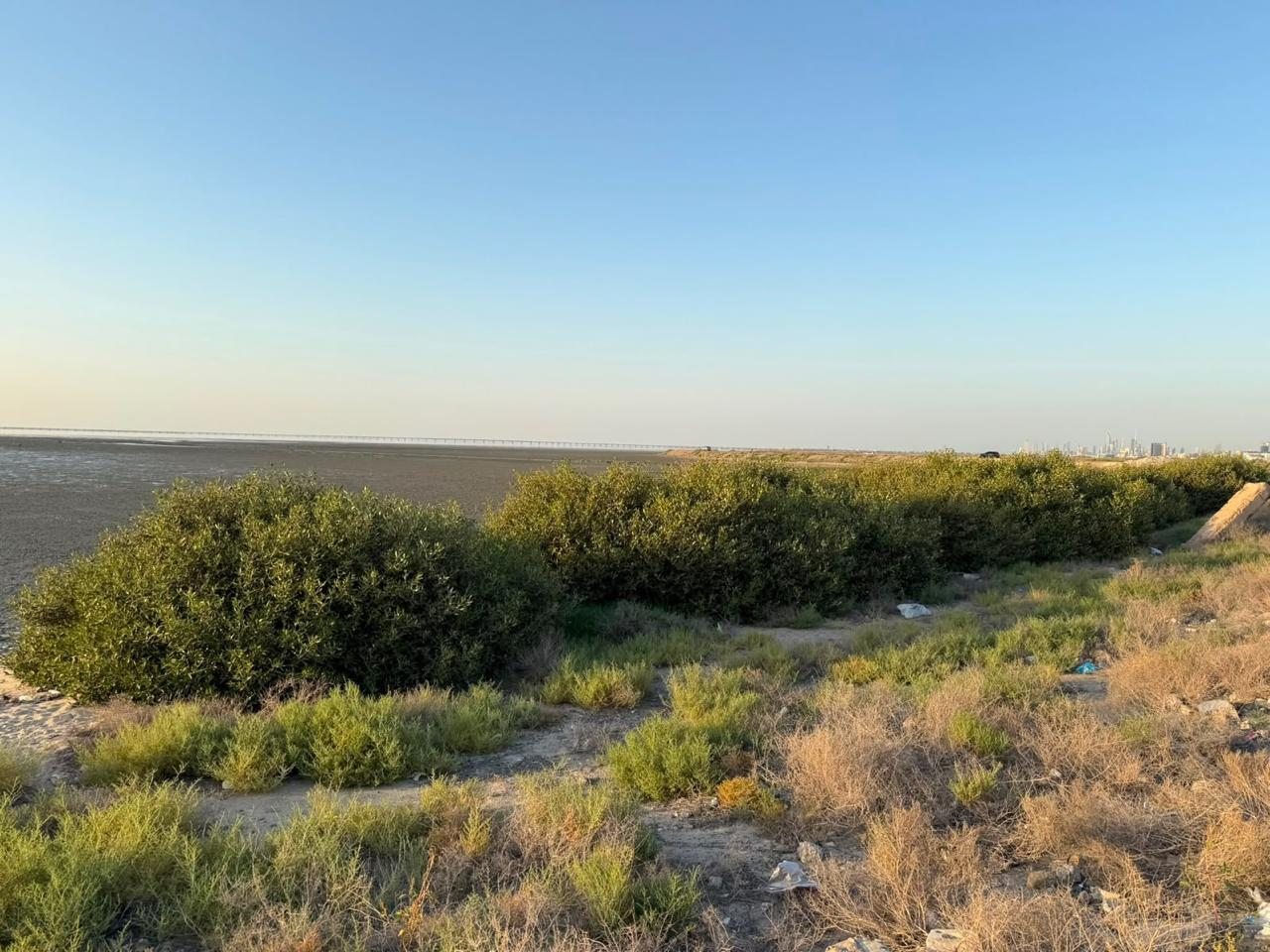
She concluded by emphasizing that “among the observed violations against the environment recently are the pollution of sea water with plastic resulting from human waste, various camping waste, overgrazing or excessive grazing, random movement of cars and heavy military equipment, and spring camps. She pointed out that, according to what was announced in the media, Kuwait Municipality removed about 140 tons of waste along the Gulf Road, as Kuwait Municipality teams worked to complete the cleaning of celebration waste in the coastal strip, starting from the Capital Governorate, passing through the Hawalli and Mubarak Al-Kabeer Governorates, and up to the Ahmadi Governorate. It was also announced that 2,800 large bags were removed from the Arabian Gulf Road, the public parking lots overlooking it, and the green spaces in just two days.”.