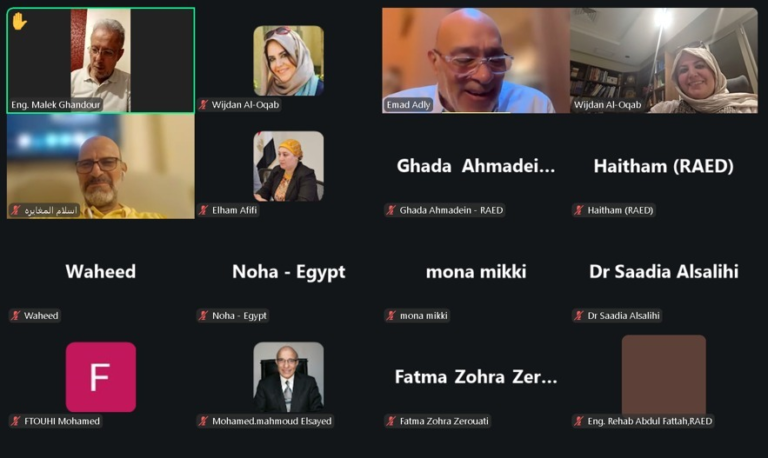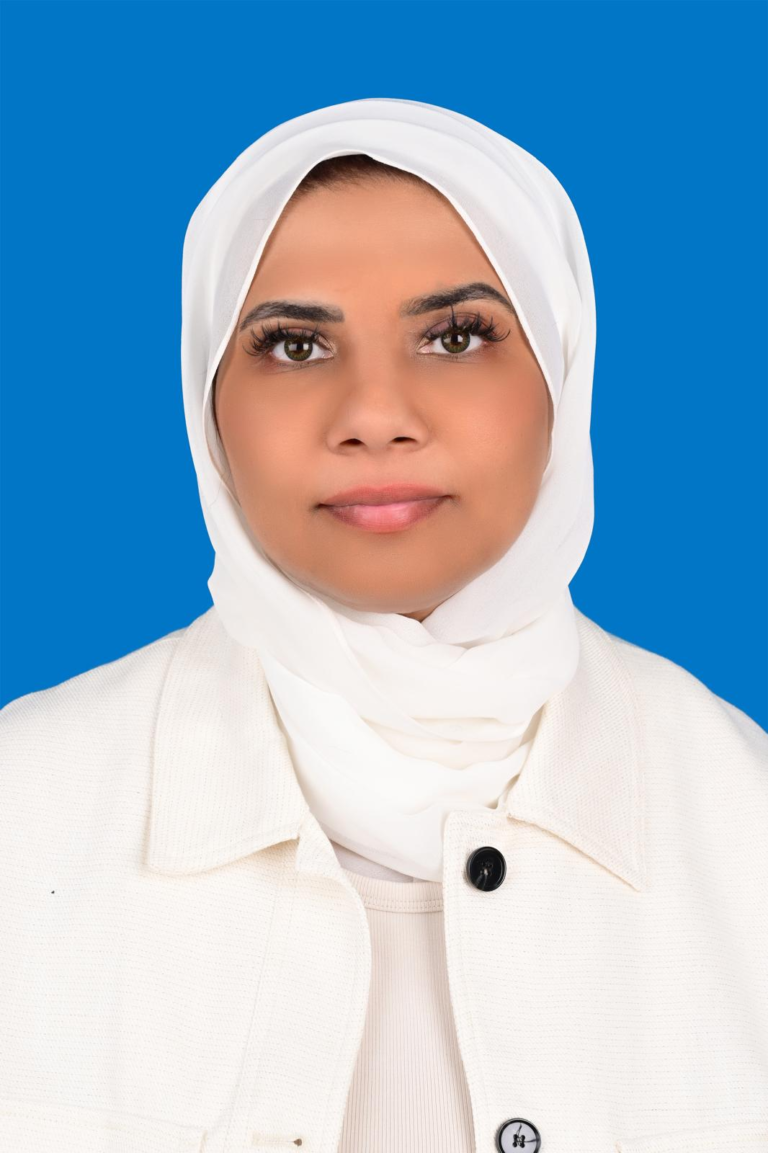
A delegation from the Kuwait Environment Protection Society participated in the activities of the 23rd session of the Arab Radio and Television Festival and the ASBU Technology and Equipment Exhibition and Program Market at the City of Culture - Chedli Klibi in Tunisia, with a delegation headed by Dr. Wajdan Al-Aqab, Chairperson of the Board of Directors, to attend the seminar on documentary film production entitled “Challenges and Opportunities Available”, which focused on documentary works related to the historical, social and political aspects, and to highlight the environmental aspect that was absent from the seminar.
To highlight the environmental aspect that was absent from the symposium, Dr. Wajdan Al-Aqab reviewed the association's journey in the field of producing short films and environmental documentation, and what it produced in this regard, saying, “The association, which is a civil society organization, presented its awareness role through the production of 293 short documentary films on biodiversity, habitats and nature reserves in the State of Kuwait and the Arab countries,” adding, “This quantity of films was divided into a series of documentary programs to document wildlife, which includes covering living organisms, including birds, tidal zone organisms, fish, wild plants and others that are found naturally in various environments.”.
Dr. Al-Aqab explained, “The main objective of this series, which has been in production for 9 years, making it the first of its kind in the Arab world, is to introduce biodiversity and the nature of the habitats found in the country. Since the countries of the world signed the Sustainable Development Goals 2030 agreement years ago, in order for countries to achieve them, the individual must know his role in that, and in order for governments to achieve them on the ground, the citizen and resident must understand their importance to him so that he can contribute and support the movement towards achieving them.“ She noted that ”many international agreements have been concluded, but unfortunately we see failure in their results due to the lack of sufficient environmental awareness reaching the citizens of these countries to explain the importance of adhering to them.”.
In the context of the seminar specializing in documentary films, Dr. Al-Aqab highlighted some of the challenges facing the production of these short documentaries, stating, “One of the most significant challenges we overcame was the limited financial support needed to cover the production costs of such works. 99% of these films are shot outdoors, both on land and at sea. We were able to overcome this challenge by securing funding from government institutions that support scientific, cultural, and awareness-raising productions, such as the Environment Protection Fund and the Kuwait Foundation for the Advancement of Sciences. We also managed to establish memoranda of understanding with government entities, such as the Ministry of Interior and its various land and sea sectors. They provided us with logistical support, which directly contributed to reducing our production costs. In addition, we received support from the Ministry of Defense. If the production required a helicopter for aerial transportation to certain field locations, they readily provided it, demonstrating their commitment to full cooperation. Similarly, if we needed marine vessels for transportation and maritime surveillance, the Coast Guard provided them. The Production Department and the Environmental Media and Documentation Center recognize all this governmental cooperation as part of our “Partners in Environmental Protection.” Without their collaboration, each contributing their expertise, this level of production would not have been possible.” Grammar.
She added, “This type of alignment with entities that can provide logistical support has had a significant impact on reducing the budget, which can exceed 100,000 Kuwaiti dinars (approximately 300,000 US dollars) per documentary season. Also, some of these duties and tasks are performed voluntarily, which contributes to reducing the work budget.”
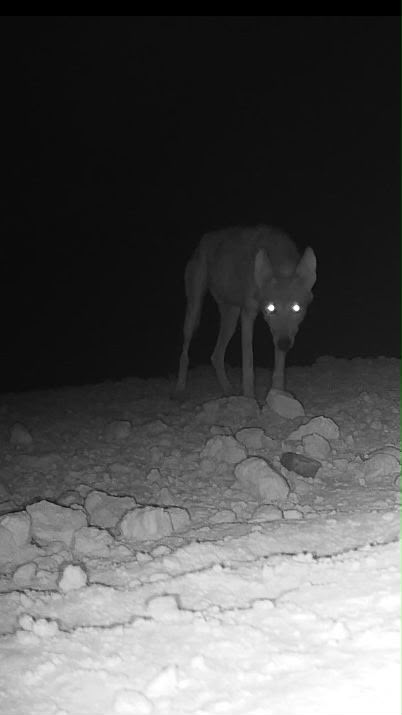
She noted, “Among the most prominent challenges are the climatic challenges and weather conditions, especially since documentation and photography take place in open areas on land and sea, where the work is filmed in changing weather conditions between heat and cold, under rain, and in sandstorms and gales, which are the storms that precede winter. This affects the devices and equipment, especially the cameras, and necessitates stopping. Sometimes outdoor filming takes place in temperatures exceeding fifty degrees Celsius in some work locations, and here we use portable refrigerators and car air conditioners to reduce the temperature of the cameras and photography equipment.”.
In the context of the challenges, Dr. Wajdan Al-Aqab shed light on the spatial challenges, and said, “Environmental photography and documentation requires long hours of monitoring in different locations and environments, many of which are far from civil life in the wilderness, mountains, sea, and islands from the north of the country to its south and from its east to its west. Creatures by nature avoid humans, which makes the process of monitoring them a difficult process in most cases. This requires a team that is passionate about its work, loves the environment, and is ready to accept these challenges and employ them to produce such wonderful works in the end.”.
Dr. Wajdan Al-Aqab explained, “The short films and documentary episodes that have been completed, numbering over 293 works, constitute the first environmental series in the Arab world. It is a visual library that provides scientifically reliable information, as it is based on scientific research and academic and legal reviews. This makes it overcome the final challenge, which is the accuracy of the environmental information and data presented in the documentary film. Therefore, it is now considered a scientific resource supporting educational curricula, as it documents every living organism in an episode or short documentary film, which has greatly helped in delivering reliable information quickly.”.