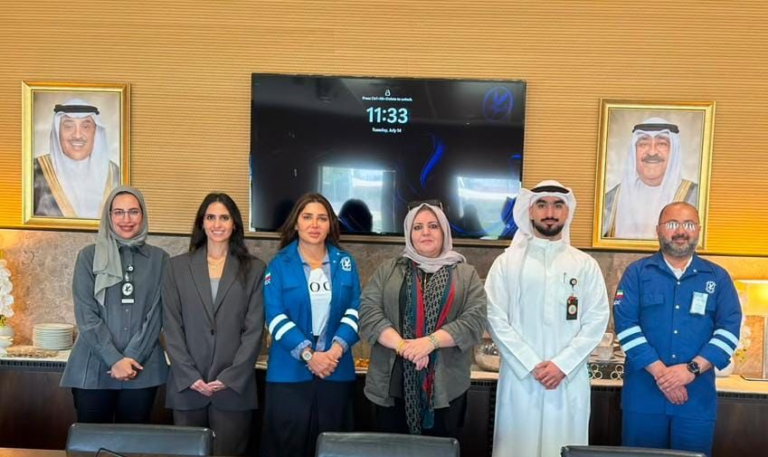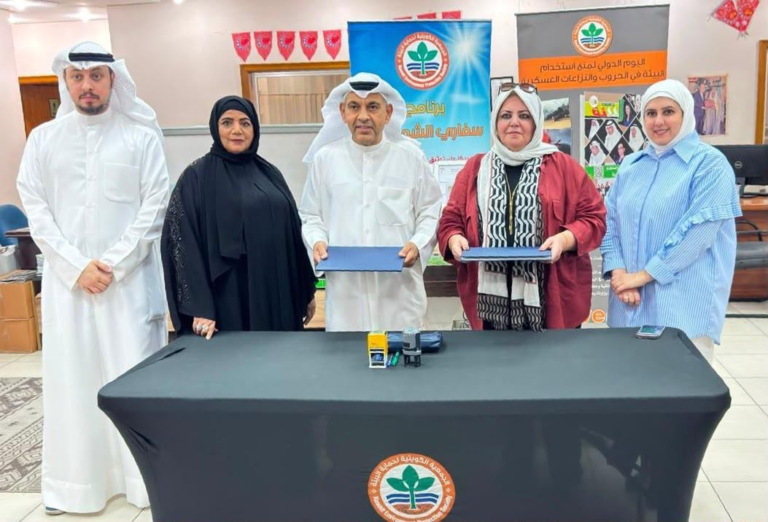
The Kuwait Environment Protection Society joined the world in celebrating World Environment Day for the year 2024, under the slogan “Our Land, Our Future,” which falls on Wednesday, June 5. This year’s celebration highlights the importance of preserving the environment and promoting sustainability, with a focus on issues of land degradation, desertification, and drought. Dr. Wajdan Al-Aqab, Chairperson of the Society’s Board of Directors, affirmed that “celebrating World Environment Day this year is in line with Kuwait’s aspirations and ambitions in the new era in the country,” hoping that environmental issues will receive high priority from our leaders and decision-makers.
Coinciding with the celebrations of World Environment Day, Dr. Al-Aqab expressed reservations about the Municipal Council's approval of the proposal to establish a camping area in the north of the country in the distinctive Jal Al-Zour area, which contains topography and highlands and is considered an attractive tourist destination for camping and wilderness recreation. She emphasized that the Environment Society had previously called for the designation of the Jal Al-Zour area as a “geopark” area, describing the adoption of this landmark as a “geopark” that achieves many goals, including educational and specialized research benefits related to geology, natural habitats and wildlife in that environmentally active area, which is consistent with the goals of the international day. She considered that the proposal to camp in this area is an infringement on it that negatively affects its environmental components and exposes it to the risks of violations by its visitors if the proposal is implemented.
The head of the Environmental Protection Association explained that “reducing land degradation in Kuwait requires a broad perspective and an applicable strategy in light of urban expansion, the misuse of land during the camping season, and the effects of overgrazing and erosion.” She stated that “one of the indicators of soil degradation is soil disintegration and the absence of vegetation cover and biodiversity.”.
She explained that “the association has monitored for years the negative effects of camping and picnicking on the desert environment in general, but the monitoring of waste and remnants of these practices is clearly visible and is observed by desert visitors before specialists, as the association has monitored many violations, including the violation of building earthen barriers in those sites, in which the loss of topsoil is estimated to be between 40 to 50 cubic meters of soil for every 100 meters of earthen barriers, a loss that has a direct impact on the vegetation cover,” adding: “This problem is considered one of the most important causes of desertification, which is called for by the International Day.”.
Dr. Wajdan Al-Aqab warned that “the nature of the Jal Al-Zour highlands is environmentally incompatible with the use of the land for camping, as the environmental damage will not be limited to the terrestrial environment and the accumulation of waste and refuse in it will have a full impact on the biodiversity in the region. To clarify this point in particular, its topography must be studied.” She emphasized that “the topography of the Jal Al-Zour highlands causes the spread of waste from the highlands to the slopes by the wind, and the slopes are a channel for rainwater runoff, which causes that waste to be transported to the sea naturally. This makes the problem of camping waste and refuse not limited to land pollution, but also marine pollution, which unfortunately will be concentrated in Kuwait Bay, which is considered a special natural environment in need of protection.”.
Dr. Al-Aqab concluded her statement by emphasizing the importance of involving experts from civil society organizations in making such decisions, as they are the best support and assistance and work hard for the public interest, which benefits the country and its people.