Dr. Qais Majeed, Head of the Science Department at the College of Basic Education in the Public Authority for Applied Education and Training, confirmed that the scientific lecture
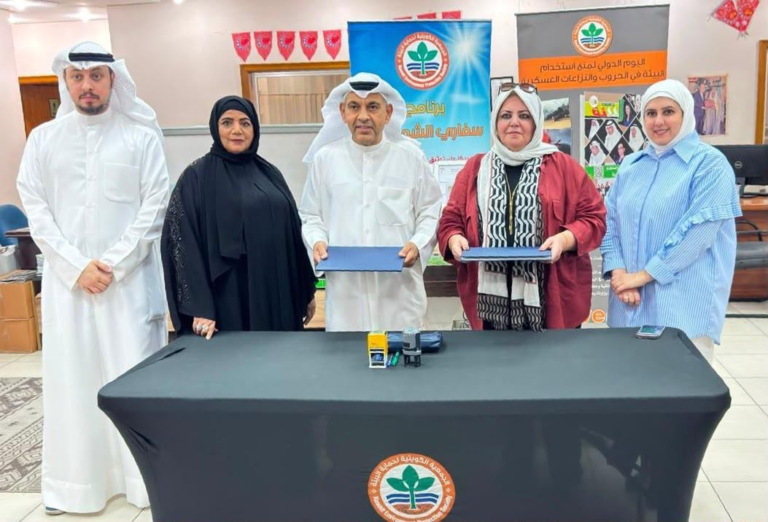
“The Impact of Desertification on the Environment,” organized by the department in cooperation with the “Green Schools” program of the Kuwait Environment Protection Society, for students of Qurtuba Girls’ High School, and presented by Reem Al-Jaber, a member of the department’s training staff, addressed several topics on the impact of desertification on the environment, explained the differences between the desert and desertification, provided a comprehensive definition of desertification and its most prominent causes, such as unplanned human activities and climate change, and showed its negative effects on the Kuwaiti environment, such as soil, vegetation cover, and animal diversity.
Dr. Qais Majeed pointed out that “the lecture falls within the framework of ongoing cooperation between the association and the Science Department at the College of Basic Education, with the aim of enhancing environmental awareness among students and highlighting important issues such as desertification and its harmful effects on the environment. This cooperation reflects the keenness of both parties to spread environmental knowledge and provide scientific content that enhances students” understanding of the importance of preserving natural resources and adopting sustainable behaviors to contribute to protecting the Kuwaiti environment and ensuring its sustainability for future generations.”.
He stated that the lecture addressed the most prominent laws that support combating desertification in Kuwait, including the Environmental Protection Law, which includes procedures to preserve the desert environment and regulate grazing operations, in addition to laws that prohibit the removal of vegetation cover and encroachment on natural areas.
As part of its efforts to preserve the environment and combat desertification, he said that the lecture showed: “The State of Kuwait has put in place a set of strict laws to protect natural resources and reduce environmental degradation, while imposing deterrent penalties on violators. Environmental Protection Law No. 42 of 2014 is the main legislative framework in this field, as it includes articles aimed at protecting vegetation cover, preventing indiscriminate grazing, and addressing any actions that would damage crops and trees or degrade the soil.”.
He added, “The lecture addressed Article 41 of this law, which prohibits unregulated grazing and damage to vegetation in public areas, with fines of up to 5,000 Kuwaiti dinars.” He noted that the lecture also clarified that “Article 40 prohibits any activity that could harm or pollute the soil of desert areas, with similar fines imposed on violators. Furthermore, the Grazing Law regulates the designation of permitted grazing areas to ensure the sustainability of vegetation cover and prevent land degradation. The Camping Law requires visitors to desert areas to obtain prior camping permits and adhere to environmental regulations, with penalties including the removal of unauthorized camps and financial fines. These laws aim to promote ecological balance in Kuwait and protect the environment for future generations.”.