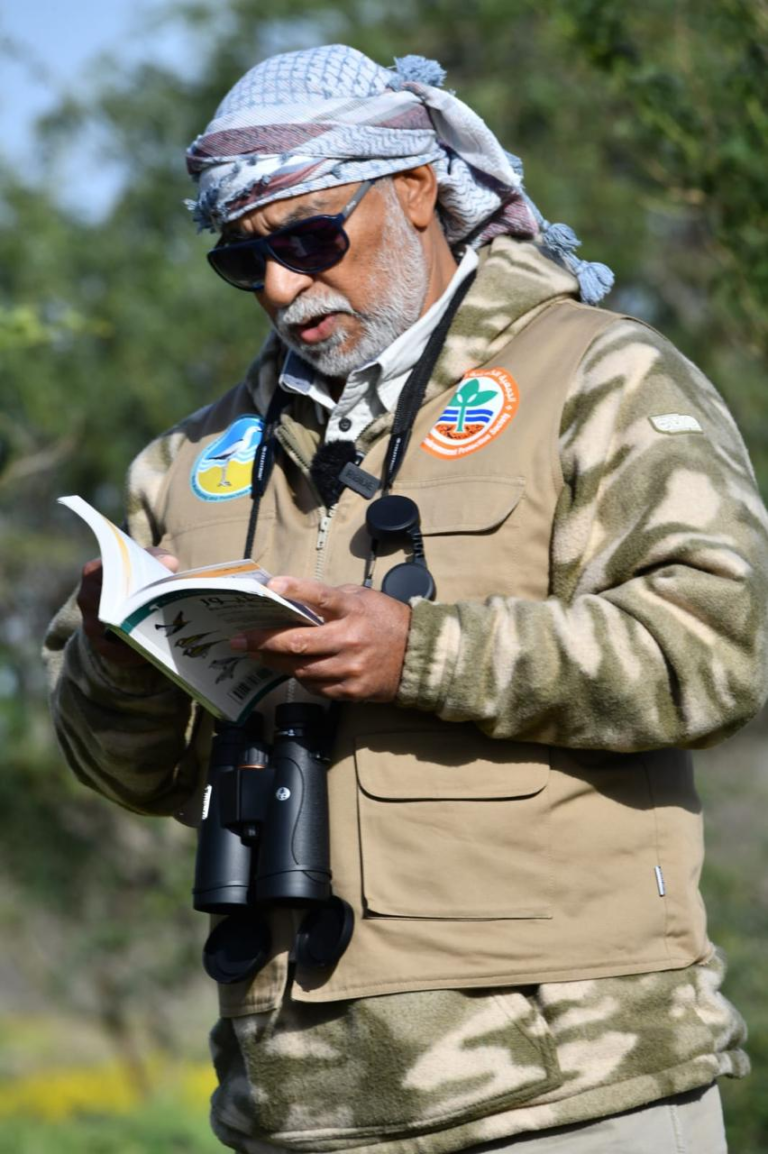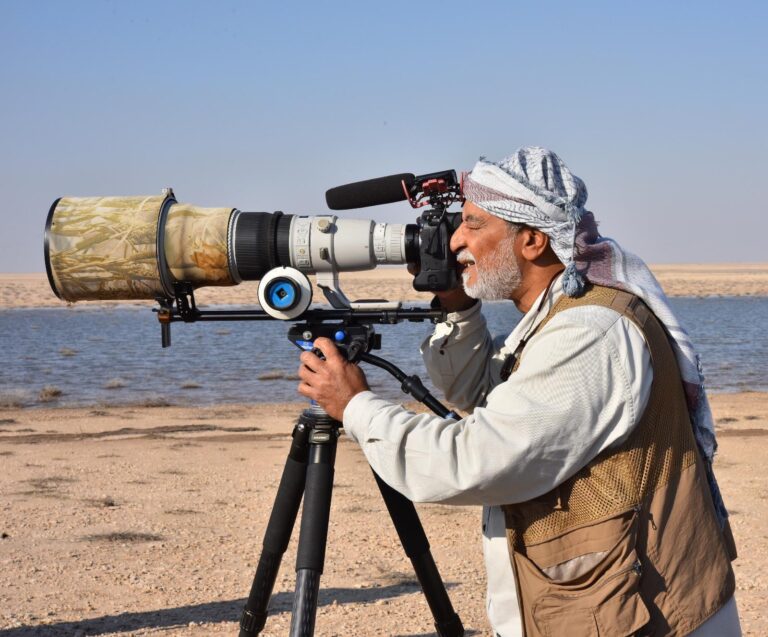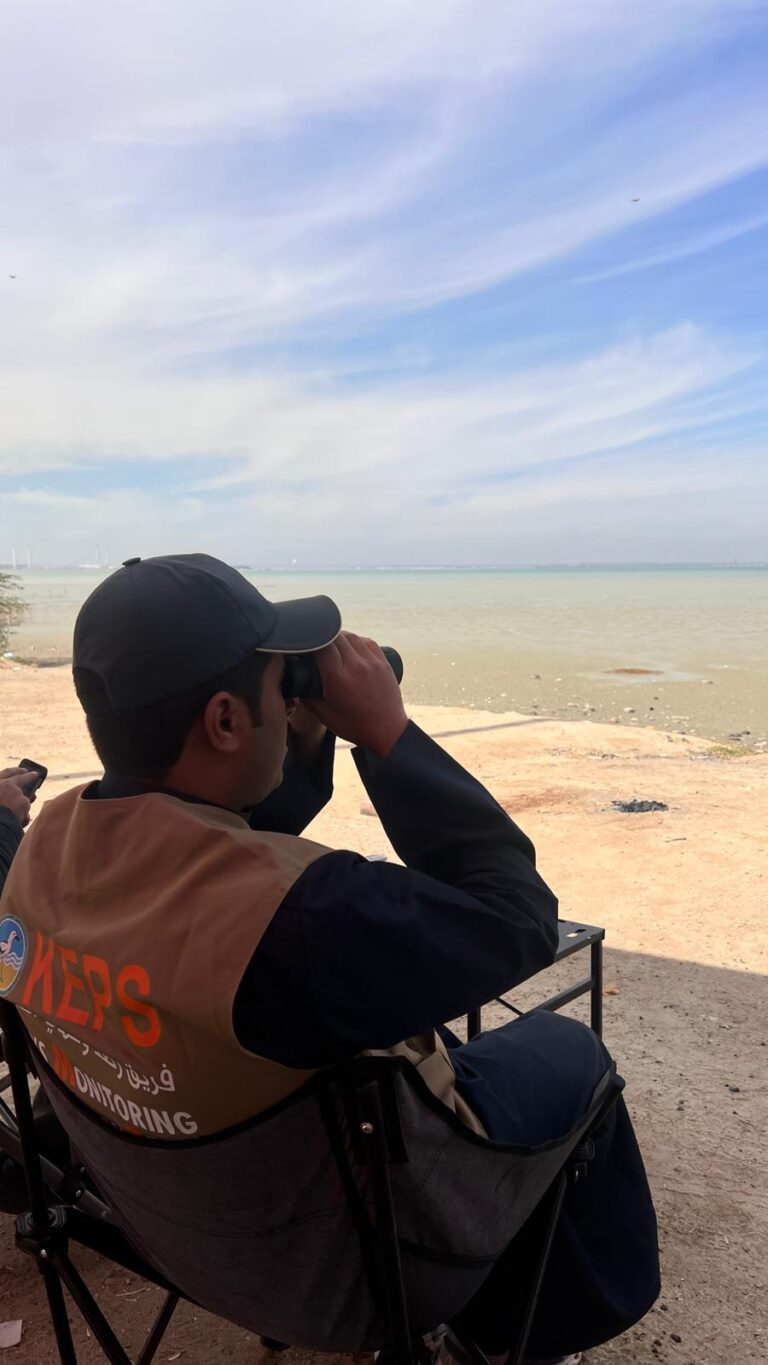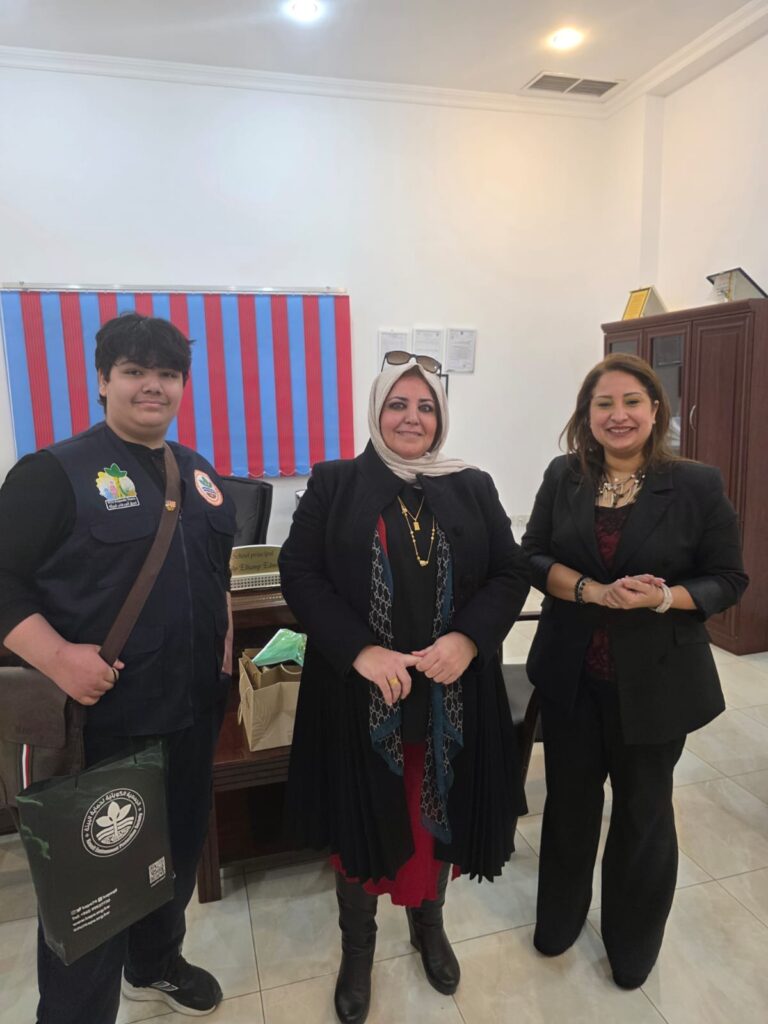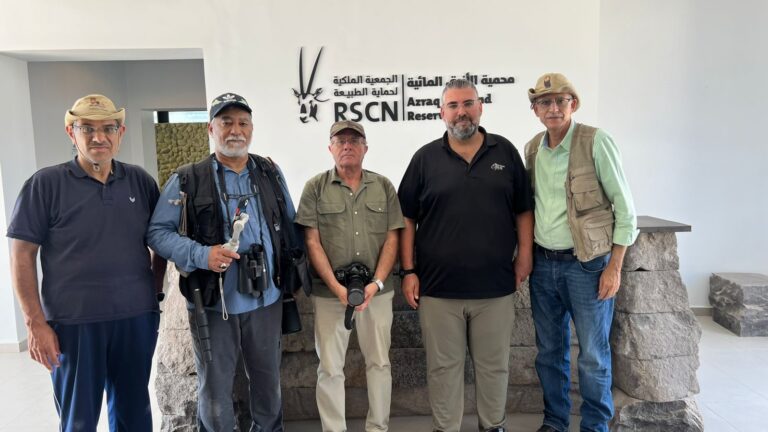
During a field tour conducted by the bird monitoring and protection team of the Kuwait Environment Protection Society in the Kabd Reserve of the Kuwait Institute for Scientific Research, the team members participating in the tour, monitor Talal Al-Muwaizri, monitor Muhammad Al-Hadina, monitor Adhari Buhamad, and the team leader Muhammad Shah, accompanied by the head of the photography and documentation team in the Society, Samira Al-Khalifa, were able to monitor many migratory and passing birds that rest for a while in the reserve during their spring migration and during their return to their nesting and breeding areas in the north.
Mohammed Shah, the team leader, said, “The reserve was well prepared to receive its guests and appeared in its beautiful form, as most of the desert plants, such as the *Arfaj*, lavender, and *Shaqari*, which fill the reserve, and even some rare plants, such as the *Tarbah Umm Qalas*, have turned green, blossomed, and spread their fragrances throughout the reserve. This encouraged us to stop for a while and enjoy those refreshing atmospheres, especially the birdsong of all kinds, each with its own special tone. Some of these birdsongs are called to introduce themselves and their location to the females, because spring is the mating and breeding season for most birds. Among these calls, the corn bunting or wheat bunting had its own special call with some movements that it performed while calling. It would perch on the flowering *Arfaj* plant and shake its wings as it danced and called.”.
Shah added: “As for the birds that had started laying their eggs in the nests, they were trying to keep us away from their nests. The common crested lark, it was clear that we had gotten too close to its nest without noticing, so it used tricks to keep us away from the nest area. It made the trick of the lame, and it started singing, calling, shaking, fluffing its feathers, and limping so that we would turn our eyes away from the nest and look at it in case we posed a danger. It was able to turn our eyes away from its nest, and it did not take long before we saw the mother-of-sallam (the woodcock) sitting on two of her eggs. As soon as we approached, she left the nest and moved away. We could not stay long near the nest so that it would not abandon it, so we took a picture of the nest and moved away immediately so that it could return to it.”.
For her part, Samira Al-Khalifa, head of the documentation and photography team at the association, said: “When I saw the owl, I couldn’t resist staying in the car. Usually, when we spot a bird, we stay in the car so that it doesn’t panic and we can photograph it before it flies away. I couldn’t stay in the car because of its lack of visibility and its camouflage policy, which it follows so that it is not visible to the eye. It was hiding behind the branches, so I got out and approached very cautiously to the tree where the owl was until I was able to take that picture.”.
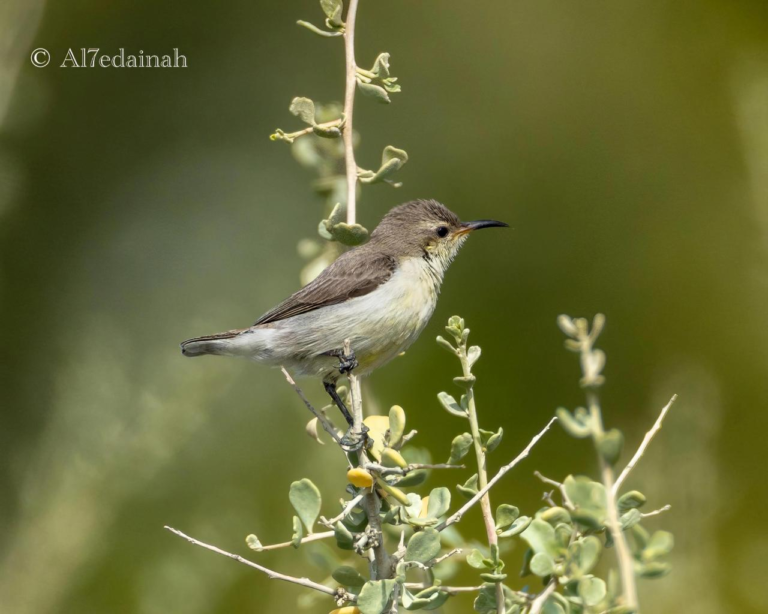
Observer Mohammed Al-Hadheena stated, “Among the birds observed in the reserve was an albino shrike, whose feathers had turned completely white. It was in good health, hunting insects and feeding on its prey.” He added, “Three Eurasian tree owls were also observed, along with several other types of wheatears, and others of the common shrike. As for the common shrike, its numbers exceeded thirty, and we no longer know the exact number because it was widespread throughout the reserve.” He explained, ”The observation list included thirty-one types of birds, including resident, migratory, predatory, and songbird species, notably one type of sunbird, or purple sunbird, which has begun to spread noticeably throughout the State of Kuwait.”.