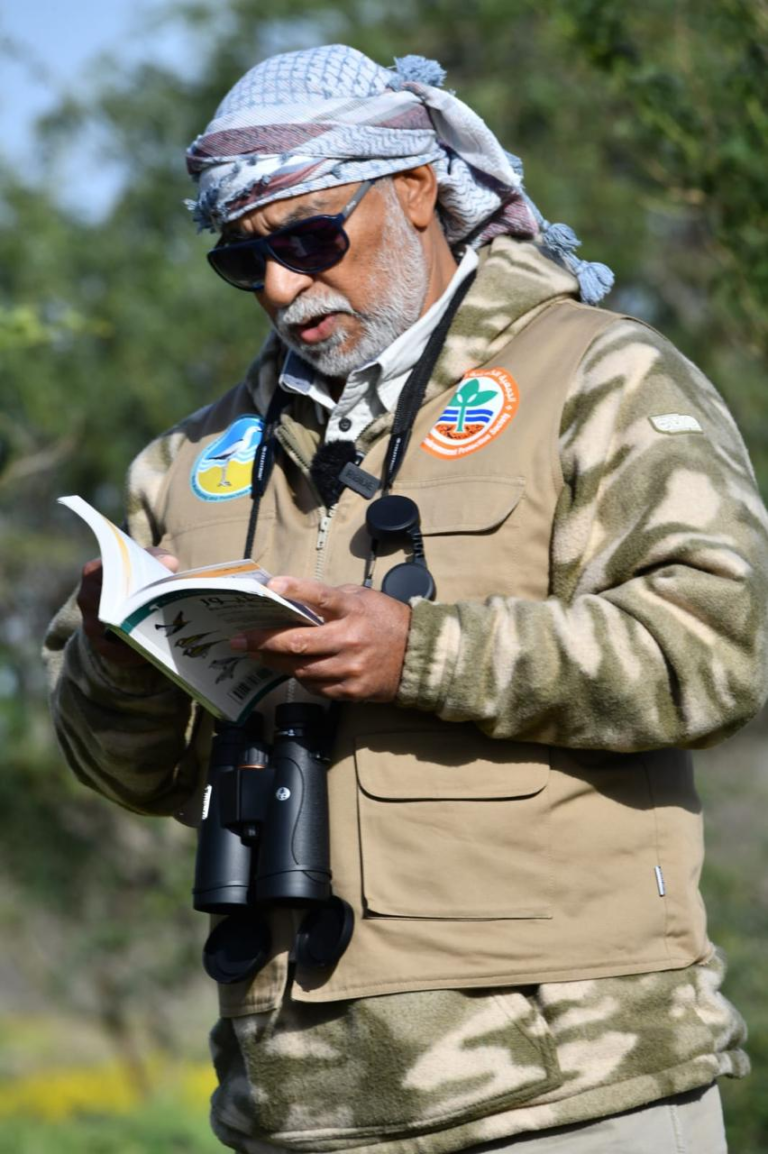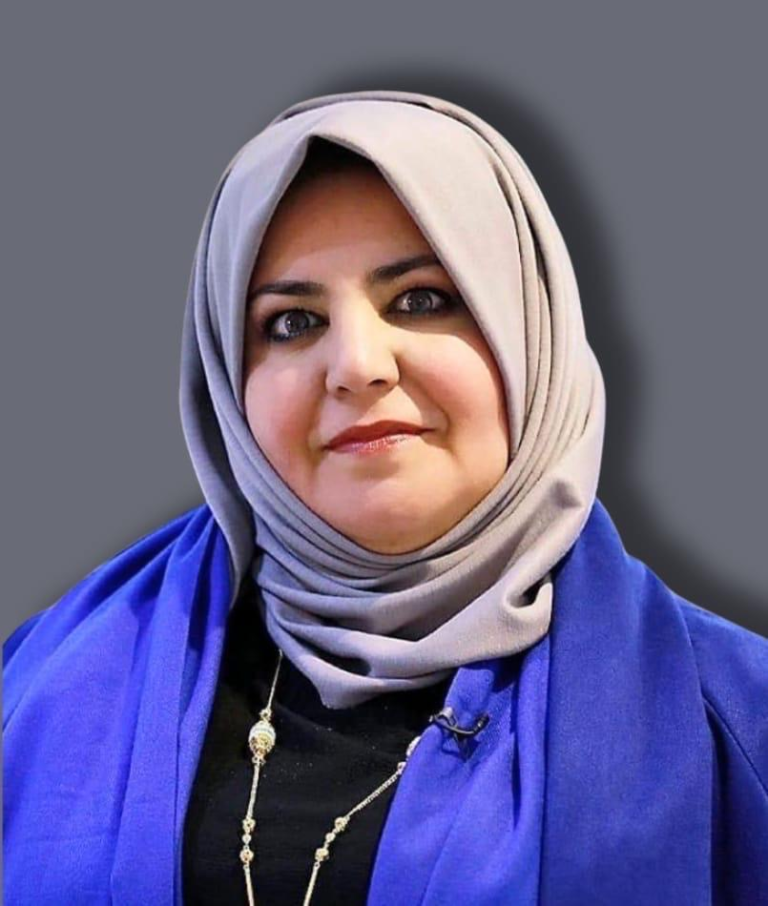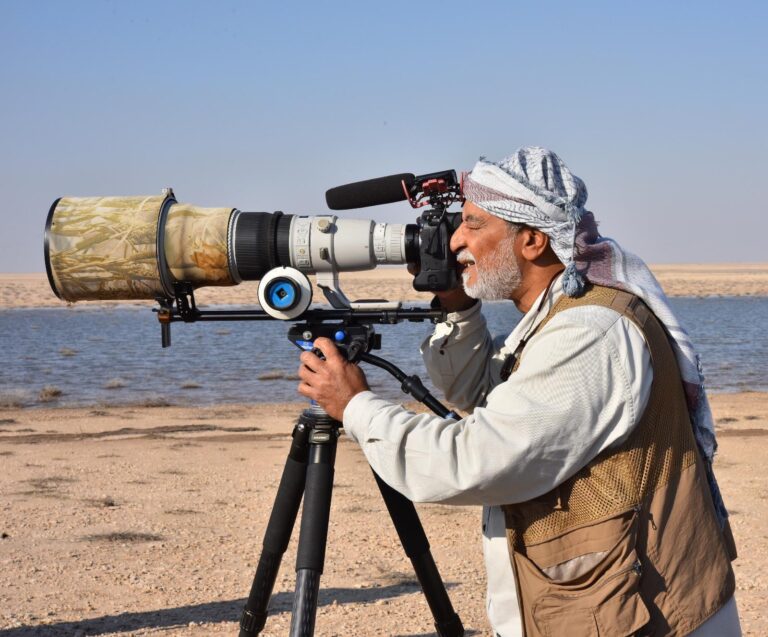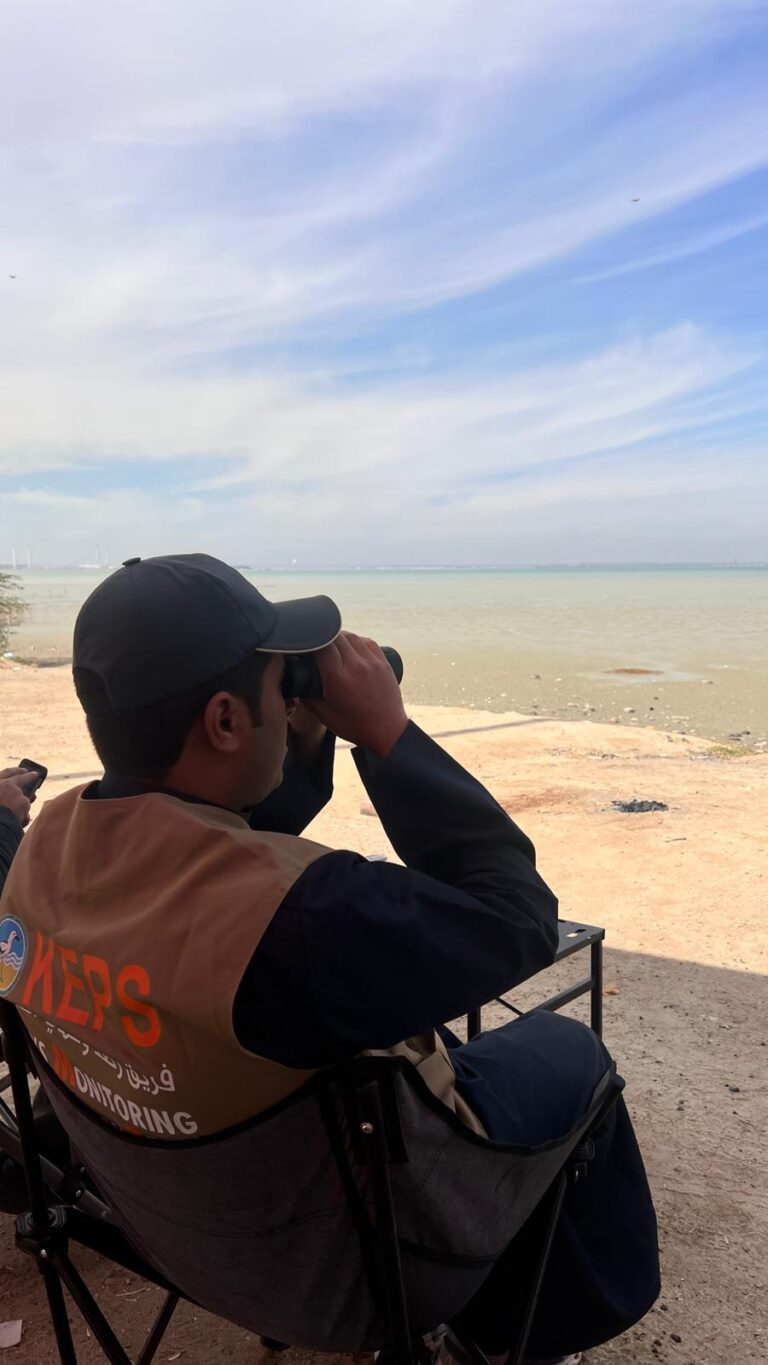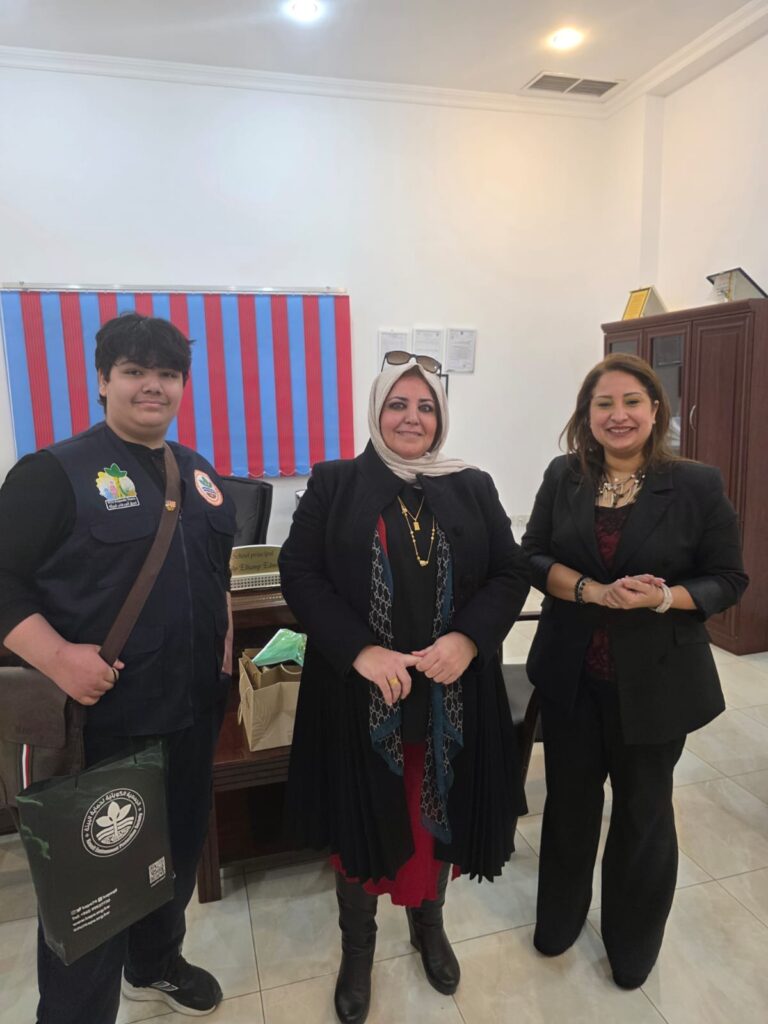
The Kuwait Environment Protection Society, represented by birdwatcher Athari Buhamad, a member of its bird monitoring and protection team, participated in a bird photography and observation trip to Turkey. The trip included local and Gulf observers and was supervised by bird guide and observer Omar Al-Turki. Athari Buhamad stated, “The trip lasted six days and covered various areas in Bursa Province, including mountainous and coastal regions, as well as some nature reserves and lakes. One of the main objectives was to observe birds that do not visit Kuwait, and those that are difficult to spot in Kuwait during their migration. We also wanted to witness and appreciate Turkey’s commitment to environmental protection and wildlife conservation, particularly for birds.”.
She added, “One of the most important birds I wanted to see was the eagles, especially the bearded eagle, which is not seen in Kuwait. It is a resident bird in the mountains and high altitudes, and I was able to see this bird clearly and take distinctive pictures of it.” She continued, “This bird is considered one of the important birds for preserving nature, as it is one of the birds that feed on carrion and bones, get rid of rotten remains, and help to keep the ecosystem free of diseases.”.
The environmental association member stated: “The bearded vultures look and wait patiently on the edge of the cliff for other animals to eat and will not compete with them for food scraps. They often feed on old carcasses and their remains, removing even the smallest unwanted scraps that others do not eat, as their stomachs secrete some acids that dissolve those bones. Some call it the “bone breaker” because of how it deals with bones that it cannot swallow. It catches them, rises to the top, and then throws them onto a rock to break and split, and then eats them.”.
She continued: “This trip was distinguished by the observation of several species that were added for the first time to my list of observed birds. Besides the bearded vulture, there was the black vulture and other birds of prey, as well as the brown owl, various types of woodpeckers, the purple heron, the white and black storks, and the pygmy cormorant.” She noted, “Multiple numbers of goldfinches and various species were observed, as the list extended to 79 types of birds, including 27 new species on my list.”.
She explained: “These trips are important for birdwatchers, as they increase the observer’s culture and awareness of different types of birds that are not seen in Kuwait, and enable him to observe their behavior, as they behave naturally and do not feel threatened in these areas. They also give us the opportunity to see birds that are considered migratory and passing through Kuwait, as some of them consider Turkey their breeding grounds, and it is possible to see their nests during the summer period.”.
Athari Buhamad concluded: “My passion for birds has increased since I joined the Kuwait Environment Protection Society and the Bird Monitoring and Protection Team, which has given me knowledge of bird species and facilitated monitoring methods in nature reserves in Kuwait. I will continue to pursue my passion for bird monitoring in Kuwait and abroad until I reach my unannounced goal.”.