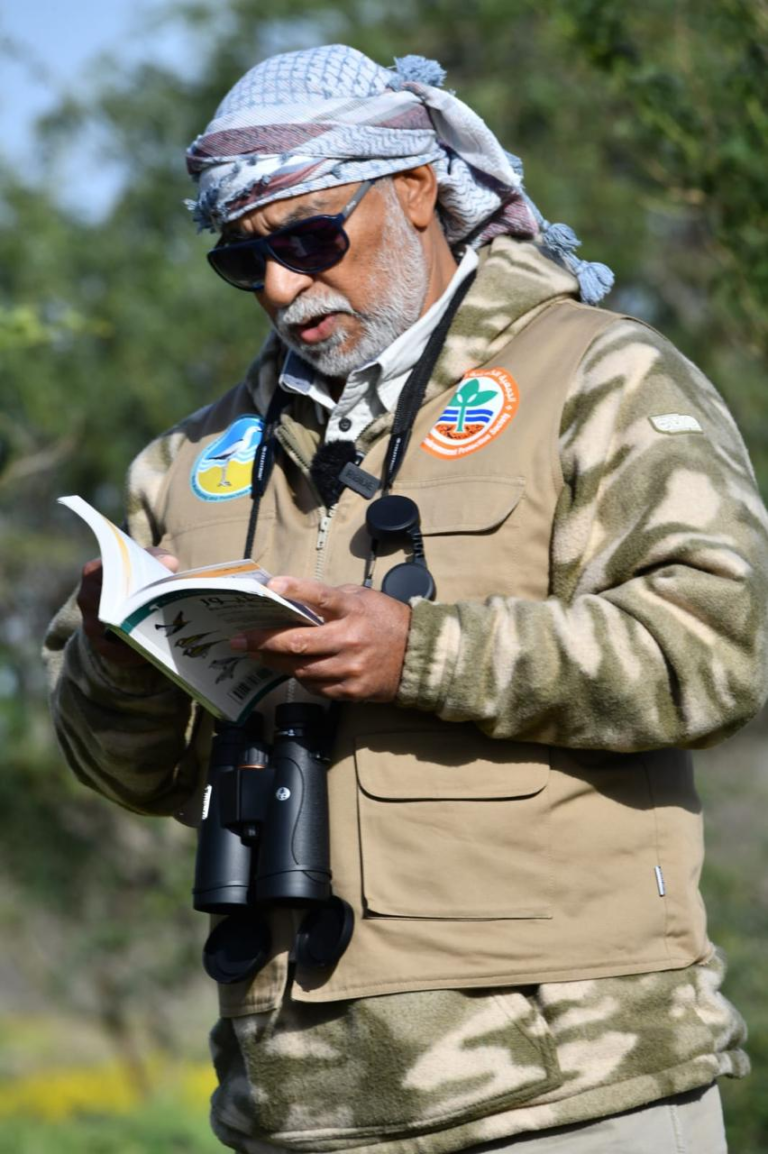
The Kuwait Environment Protection Society commented on the sighting of the rare sand cat by Talal Al-Muwaizri, a member of its bird monitoring and protection team, stating that “protecting this creature requires community awareness, respect for the environment, and support for research and environmental monitoring efforts. Every habitat preserved, every law enforced, and every violator deterred is a step towards preserving this natural treasure that lives among us and is only seen by those who seek with love and respect for nature. Let us protect the sand cat, for it is a symbol of our desert and a witness to its diversity, and this is one of our duties towards future generations.”.
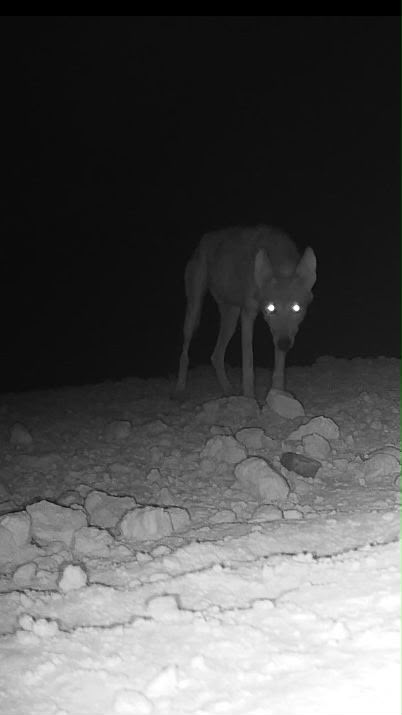
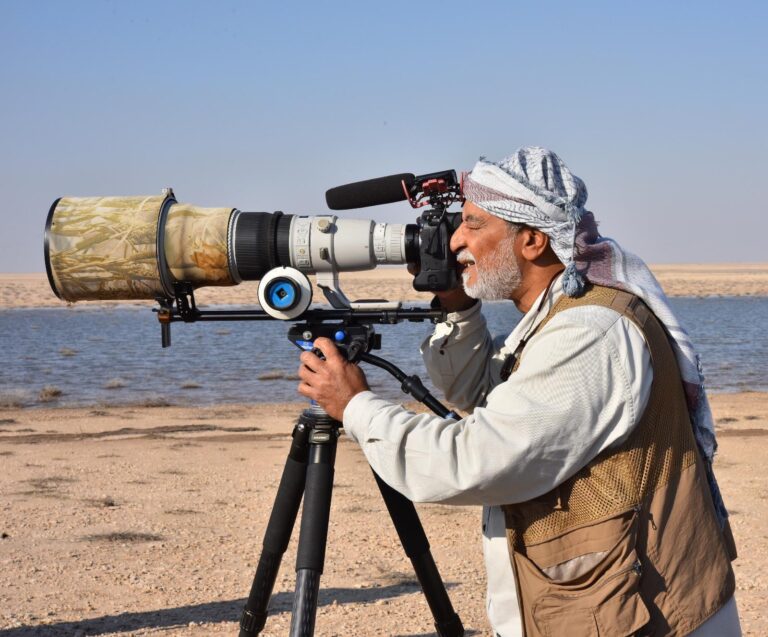
In this context, Talal Al-Muwaizri, a member of the association and a member of the bird monitoring team, said: “I embarked on an exploratory field trip deep into the Kuwaiti wilderness to monitor one of the rarest wildlife in the country, specifically in areas far from urbanization and noise, where a rare creature lives that many do not know, called the “sand cat” or what is locally called the cat or the ”Tafah”.
He adds: “The trip came as part of personal efforts to document wildlife in Kuwait, specifically this threatened animal, which appears only rarely, and is difficult to see except by chance or by searching for it for several hours without stopping, and sometimes for several days at certain times of the night, because it has been recorded moving long distances in one night, about 5 to 10 kilometers.”.
He describes it as “a cautious nocturnal creature that is difficult to track or monitor without a precise knowledge of its behavior. It likes sandy and gravelly lands that contain what is locally called “mataneeg,” and some lands where there are some shrubs such as tamarisk and rhododendrons. However, we noticed its presence near colocynth shrubs (al-shari), and the reason is the abundance of rodent burrows such as mice and rats that are near this plant, which are a main food source for the sand cat, in addition to reptiles, insects, birds, and even the horned viper (Um Junaib), which it surprises with a quick blow to the head that is enough to kill it. According to the International Union for Conservation of Nature (IUCN), the sand cat is classified as ‘near threatened.’”.
The member of the bird monitoring and protection team at the Environment Society continues his talk and says: “Because of the decline in its numbers as a result of habitat loss, illegal hunting, and human impacts on the desert environment, and the scarcity of recorded sightings of it in the wild indicates a decrease in its numbers, or an increase in camouflage behavior due to threats, in addition to the fact that the prey base of small mammals for the sand cat depends on the presence of sufficient plants, and may face great fluctuations due to drought or a decrease due to desertification and loss of natural vegetation cover.”.
Al-Muwaizri stated: “The sand cat has several subspecies, including the Pakistani subspecies (scheffeli), the Turkmen subspecies, the Niger and Sudan subspecies (airensis), and the North African subspecies (margarita). However, today we are talking about the Arabian subspecies (harrisoni), so the name of the Arabian subspecies becomes (Felis margarita harrisoni).” He pointed out that “the sand cat is considered one of the smallest cats, weighing between 2 and 3.5 kilograms, and reaching a length of about 50 centimeters without the tail. Its color is reddish sandy, which provides it with excellent camouflage in the desert environment. Its ears are wide and set low on the sides of its head, which helps it to hide. The soles of its feet are covered with thick black hair to help it jump in the sand. If it senses danger, it lies flat on the ground so that its entire body is at ground level. If the prey is large, it eats some of it and buries the rest, returning to it after a while.”.
He noted that “it digs a burrow under some perennial shrubs or in quarries, where it remains in its burrow throughout the day in a state of hibernation to conserve fluids in its body, because there is no water in the desert during the summer. It is adapted to living without water, as it obtains it from the body fluids of its prey.” He pointed out that “the cat lives a solitary life, and the female and male meet during the mating season, which occurs twice a year, the first time in March and the second time in October. The female gives birth to 2 to 6 pups after a gestation period of two months. The enemies of this cat in the desert are eagles, hyenas, foxes, wolves, and other predators that prey on the young cats, because the adults can defend themselves and escape.”.
Talal Al-Muwaizri explained that “its greatest enemy is man, as some of them kill it without reason, trade in selling its young, and hunt it with Saluki dogs. This is unacceptable and shameful because the hobby of hunting with Salukis is an authentic hobby in the Arabian Peninsula, and these are a minority who seek to distort this hobby and heritage. Of course, they do not know the principles of hunting, and they only represent themselves. It is said that the word ”tafah’ comes from ‘tafah,’ which is a description, for example, a trivial man, because of his triviality in hiding, as is clear in the pictures, he lay down on the ground believing that he was hiding. That is why he is called ‘tafah’.”.