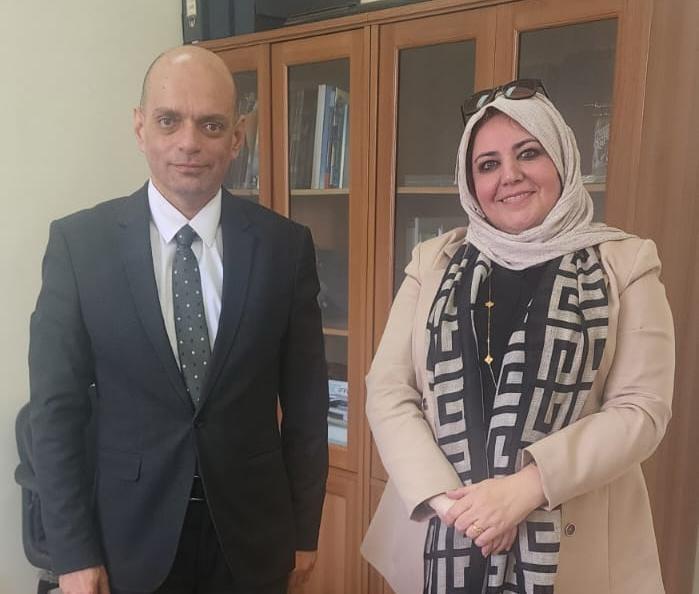
The Kuwaiti Society for Environmental Protection announced its preparations for organizing an event for the “International Day for Disaster Risk Reduction” at the Arab level, in coordination and cooperation with the Department of Environmental Affairs and Meteorology at the League of Arab States. In this context, Dr. Wajdan Ali Al-Aqab, President of the Society, stated that “the International Day for Disaster Risk Reduction event, which the Society organizes on October 13th of each year, aligns with the Arab Coordination Mechanism for Disaster Risk Reduction at the League of Arab States. This ensures broad participation from member states and key stakeholders to discuss strengthening disaster risk reduction in the Arab region, review the Arab Strategy for Disaster Risk Reduction, and highlight the National Committee of Civil Society Organizations for Disaster Risk Reduction.” Dr. Al-Aqab noted that… The statement emphasized “continuous coordination with the Minister-designate, Dr. Mahmoud Fathallah, Director of the Department of Environmental Affairs and Meteorology, and Head of the Technical Secretariat of the Council of Arab Ministers Responsible for Environmental Affairs at the League of Arab States, to develop the event’s executive content, including lectures, workshops, and participating entities.” It further noted “the commitment to ensuring that the event, which has local, regional, Arab, and international dimensions due to the diverse range of participating entities and national and international experts, includes various themes and objectives. These include discussing national and Arab action mechanisms and efforts, coordinating with international partners, and assessing the extent and possibility of developing these mechanisms in accordance with emerging developments and the specific circumstances of each country.” The statement explained that “the event, organized jointly with the League of Arab States, involves numerous Kuwaiti, regional, and Arab governmental bodies and civil society organizations, as well as international organizations such as the United Nations Office for Disaster Risk Reduction (UNDRR). The aim is to adopt and implement national, regional, and Arab strategies for disaster risk reduction, address efforts to support capacity building in Arab countries, integrate disaster risk reduction into sustainable development policies, raise risk awareness, and coordinate regional action within the Sendai Framework for Disaster Risk Reduction.” She noted the participation of the Arab Network for Environment and Development “Raed« and the Global Network of Civil Society Organizations for Disaster Risk Reduction (GNDR), through the Network’s Regional Advisory Group on Disaster Risk Reduction. She explained that the keenness, scale, and diversity of the events at the local, regional, Arab, and international levels through which the association participates in the global celebrations of the "International Day for Disaster Risk Reduction" reflect the extent of the attention it gives to the content and symbolism of these events, commensurate with the stature and value of the participating scientists and experts, and consequently, the international recommendations that may result, which are binding in many aspects and plans. She pointed out that "efforts exerted in the field of disaster risk reduction are participatory and collaborative globally and locally, involving governmental bodies in their executive capacities, as well as civil organizations with their expertise, specialists, and ability to quickly engage with the community." Dr. Wajdan Al-Aqab concluded by emphasizing that "there are many events and activities in which the public and private sectors can collaborate, including the celebration of the International Day for Disaster Risk Reduction, which falls on October 13th of each year, and its use in raising community awareness, as per the Sendai Framework and the United Nations' call for this occasion to be celebrated with the participation of all relevant governmental bodies and the public and private sectors alike," as indicated in Article 7 of the preamble to the Sendai Framework. Recognizing the leading, regulatory, and coordinating role of governments, they should engage with relevant stakeholders, such as volunteers and professionals, when designing and implementing policies, plans, and standards. The public and private sectors, civil society organizations, and academia, scientific institutions, and research centers should collaborate and work more closely together.