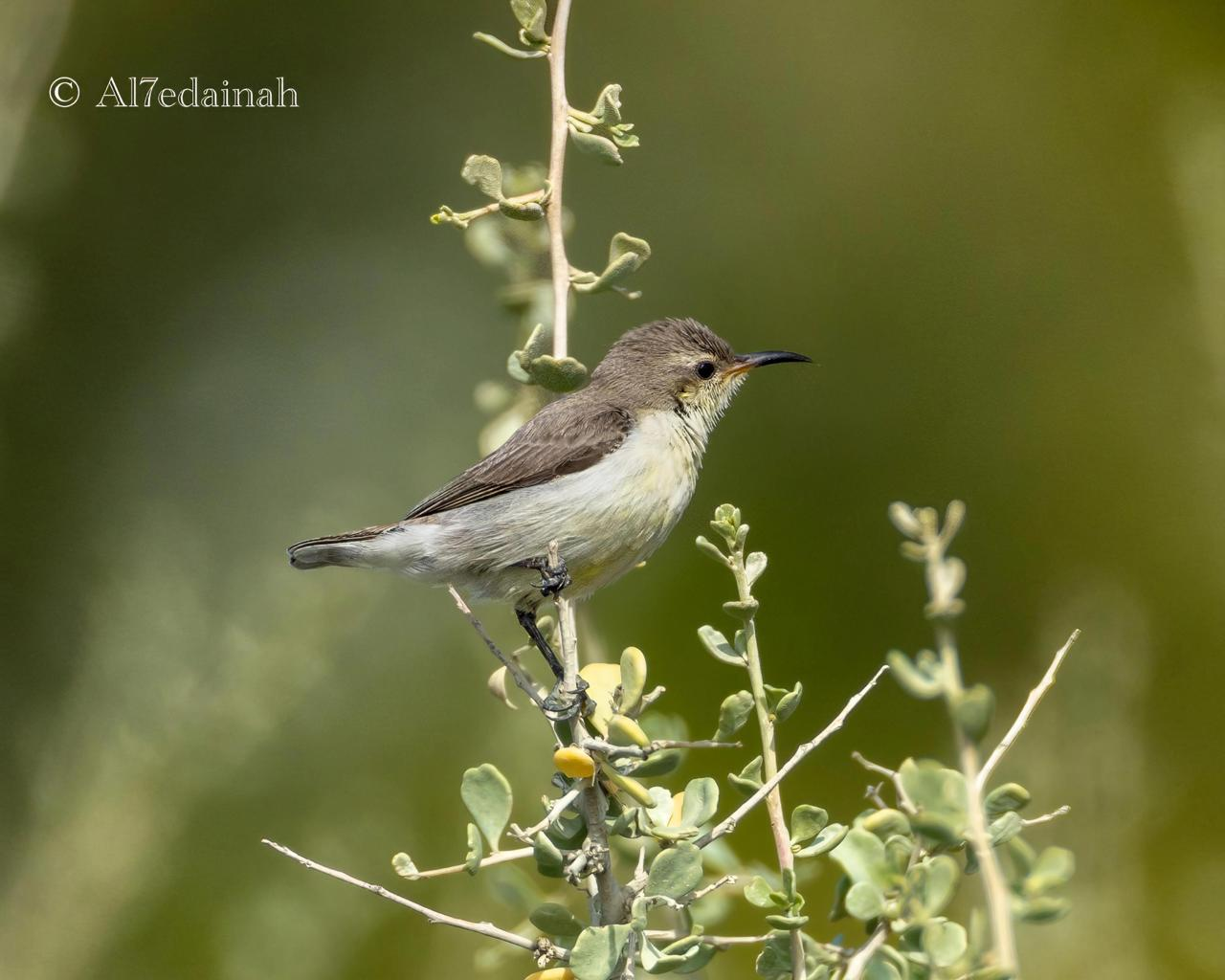
The Kuwaiti Society for Environmental Protection, through its bird monitoring and protection team member Mohammed Al-Hadheena, affirmed that “the environmental landscape in Kuwait is witnessing remarkable scientific activity led by wildlife observers and documenters, who have recently succeeded in recording striking and surprising shifts in the behavior and movement of some rare and migratory birds. These field observations do not merely document fleeting passages, but rather provide conclusive evidence of tangible changes in the temporal, geographical, and biological patterns of some species in the region.” Mohammed Al-Hadheena explained, “Among these changes is the Short-tailed Shearwater, a seabird known for its rarity in the past. The first sighting was recorded off Ras Al-Salmiya on May 24, 2014, followed by limited and isolated sightings on May 21, 2021, in the sea off Al-Zour and Qaruh Island.“ He added, ”However, the last two years have witnessed an exceptional and unprecedented surge. Between late April and mid-June of 2025 and 2026, sightings gradually increased from groups of 6 to 9 birds, culminating in a flock of 20 birds near Mina Al-Ahmadi in 2025, and another flock of 24 birds at once near the Shuaiba area in 2026.” He noted that “what is particularly interesting is the repeated sighting of the bird in inland environments such as the Jaber Bridge, with numbers ranging from two to five birds, and even reaching 10 birds in a single sighting. This confirms the penetration of this species into Kuwait Bay, taking advantage of the water currents and marine nutrients.” A member of the Bird Monitoring and Protection Team at the Environment Society noted, “On the terrestrial level, the Black Scrub Robin has registered a significant event that could change its grazing classification in the country. After being merely a migratory bird, observed sporadically during the spring and summer months – the first sighting being in 2006, when only solitary birds were spotted between reserves and farms – it has recently undergone a radical shift in its behavior.“ He added, ”The bird has been observed during unusual winter periods, and the most prominent and important event for observers was the establishment of a pair of these birds since 2025, and the successful detection of a chick that is still present at the site. This breeding record represents a qualitative leap, and if its presence continues, the Black Scrub Robin will be classified as a confirmed breeding bird in the Kuwaiti environment.” Regarding the Purple Sunbird, Mohammed Al-Hadheenah said, “Records have shown that it has become a regular winter visitor to gardens, farms, and residential areas. Its presence is concentrated in the colder months, with observations beginning in November and continuing until February and March of the following year (as documented in early 2025 and 2026). This transient bird was first documented on January 5, 2008, in Ras Al-Subiya, and on November 11, 2014, in Al-Khiran, after which it appeared in several other locations.“ He continued, ”In recent years, the bird has become a familiar sight in its usual wintering grounds, making excellent use of the landscaping and public parks (such as Al Shaheed Park, the Sheikh Jaber Al-Ahmad Cultural Centre, and residential areas like Abdullah Al-Salem and Abu Al-Hasani suburbs, and the areas stretching from Nuwaiseeb to Al-Julaia). Recent field data confirms that this magnificent bird's presence begins regularly in November and continues until March, reflecting its remarkable success in adapting to the country's ornamental and agricultural vegetation.“ Al-Hadheena concluded, ”This meticulously documented data not only reflects the passion and precision of Kuwaiti field observers but also provides researchers and environmental authorities with a wealth of scientific material to understand the impact of climate change, the evolution of vegetation cover, and the importance of protecting the marine and land routes that make Kuwait a vital stopover and refuge for birds in the Arabian Peninsula.”.