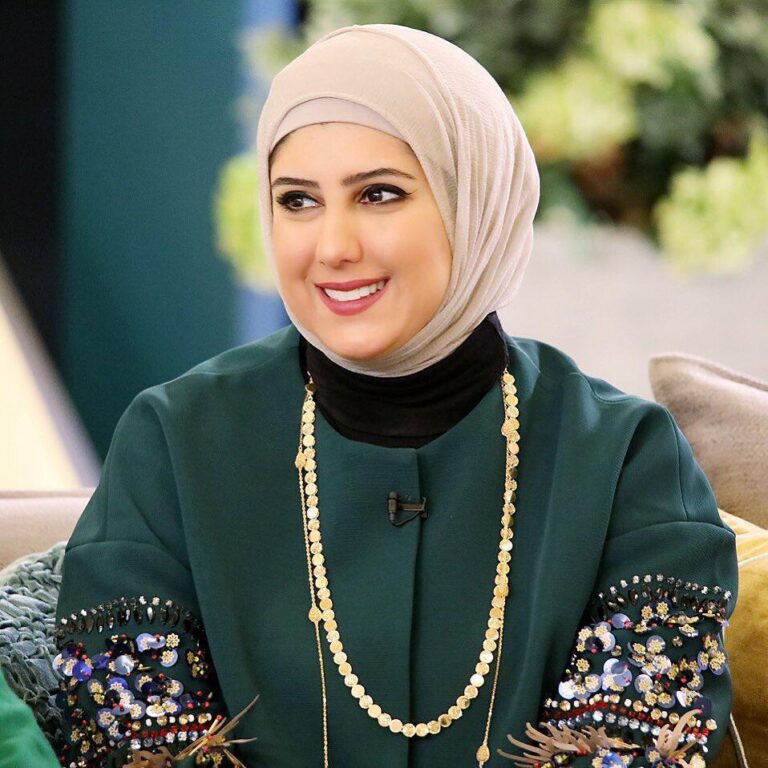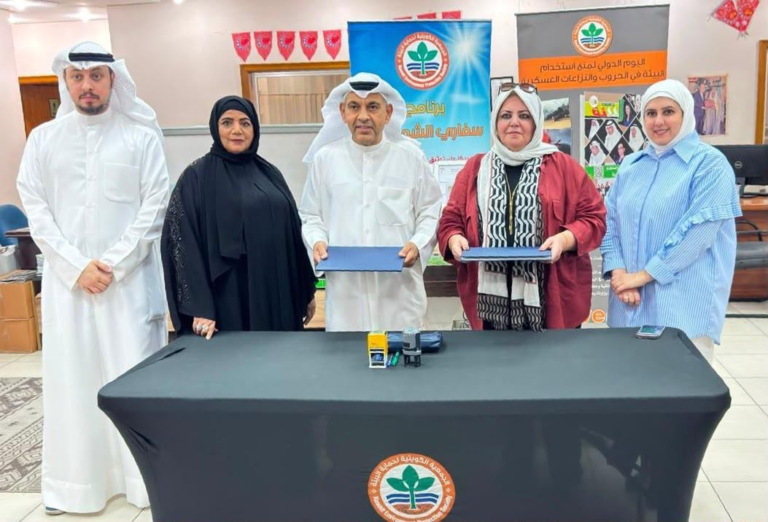
The head of the Kuwait Environment Protection Society, Wajdan Al-Aqab, confirmed that the initiative of the Jordanian Ambassador to Kuwait, His Excellency Saqr Abu Shtal, to host “An Environmental Diplomatic Evening for the Arab Family,” which included 3 Arab ambassadors and a delegation of environmental experts from four Arab countries, guests of the Society, to discuss the frameworks of joint Arab environmental media, achieved multiple results in promoting Arab environmental media, praising the invitation, which was appreciated by the participants, and the Environmental Diplomatic Evening for the Arab Family.
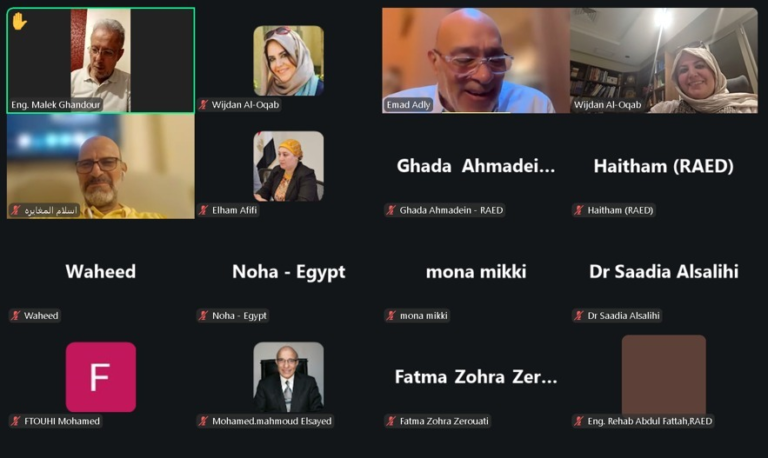
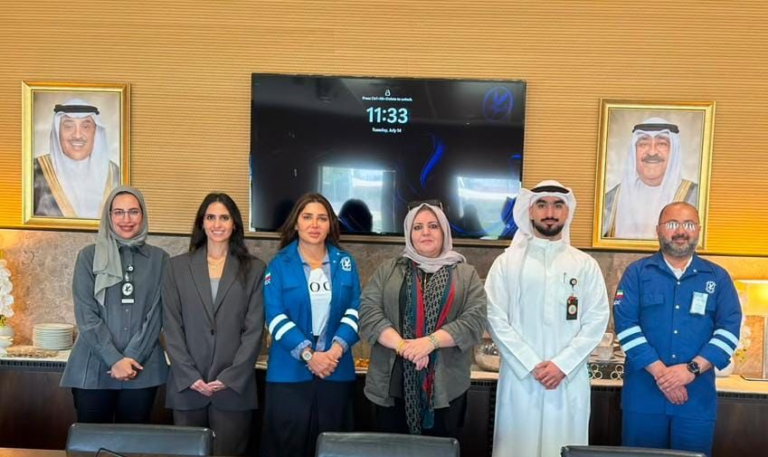
Al-Aqab said in a press statement today that the initiative “The Environmental Diplomatic Evening for the Arab Family,” which was hosted at the home of the Jordanian Ambassador to Kuwait, Saqr Abu Shtal, included the Yemeni Ambassador, Dr. Ali Mansour bin Safaa, and the Iraqi Ambassador, Dr. Alaa Al-Hashemi, along with the President of the Environment Association and Secretary-General for Environment and Sustainable Development in the Arab Producers Union, Wajdan Al-Aqab, as well as a delegation of Arab environmental experts, including from Lebanon, the President of the Insan Association for Environment and Development and the West Asia representative of civil society in the United Nations Environment Programme (UNEP), Engineer Marie Therese Marhej Seif, the President of the ”Amwaj Al-Biaa“ Association and the President of the ”Lebanese Gathering for Environmental Protection,“ Engineer Malek Ghandour, from Iraq, the President of the ”Together“ Association for the Protection of the Environment and Humanity, Engineer Saadia Hassoun, from Jordan, the Director-General of the ”Al-Ard Al-Tayyiba for Development and Environment” Association, Engineer Hayel Al-Amoush, and from Yemen, Dr. Yasser Baazab.
She explained that the “Environmental Diplomatic Evening” addressed specialized environmental media and its most prominent fields and issues, as well as discussing the effects of wars and military conflicts on the environment in Arab countries, noting the discussion of environmental media work in which specialized civil society organizations from Kuwait, Iraq, Jordan, Yemen and Lebanon participate.
The head of the Environmental Protection Association reported that during the discussion of some environmental damage in the region, the attendees touched on the disaster of draining the marshes over the years and its impact on the region. Engineer Saadia Hassoun explained the return of water to the region, adding: “His Excellency the Iraqi Ambassador to Kuwait, Dr. Alaa Al-Hashemi, shared a video of the marshes in their current state, which appears to be improving. He then invited the association and the attendees to monitor and document wildlife and environmental recovery in the marshlands of southern Iraq, which constitute a highly sensitive ecosystem and unique ecological diversity that includes many rare biological species.” She noted that the invitation was accepted and discussed with the relevant parties to fulfill it and study the effects of the return of the marshlands to their former state on the Kuwaiti environment.
Engineer Marie-Therese, President of the Human for Environment and Development Association, West Asia Civil Society Representative to the United Nations Environment Programme (UNEP), and Vice President of the Lebanese Green Party, delivered a presentation introducing UNEP and the role of civil society in addressing the concerns of the 12 countries in West Asia. She explained that this role is being explored through the drafting of a statement to be issued by the West Asia Regional Consultative Meeting of Major Groups and Stakeholders, held in preparation for the Fourth United Nations Environment Assembly and the Seventeenth Global Forum of Major Groups and Stakeholders. The statement urges governments attending the meeting in Nairobi, Kenya, from March 11-15 – an annual, high-level meeting of UNEP with the participation of 192 countries at the level of environment ministers and permanent ambassadors to UNEP in Nairobi – to work towards alleviating the suffering of these countries from numerous problems. She emphasized that West Asia's reliance on oil and other resources has made the region a stage for armed conflicts and competing interests, which have had serious consequences for the population and the environment, including fuel pollution. "Fossil.".
In her speech, Marie-Thérèse addressed: “Water scarcity, high rates of unemployment, air, water and soil pollution, human and animal deaths, and numerous health impacts are examples of the consequences of armed conflicts in the region. West Asia also possesses one of the world’s largest reserves of oil and natural gas. Therefore, we need alternative energy and a shift from fossil fuels to renewable energy. Our goal is to take the necessary actions to identify and evaluate potential economic, social and political measures and human interventions that can be implemented to reduce anthropogenic greenhouse gas emissions and pollution from various sectors at the national level, especially in areas suffering from environmental disasters.”