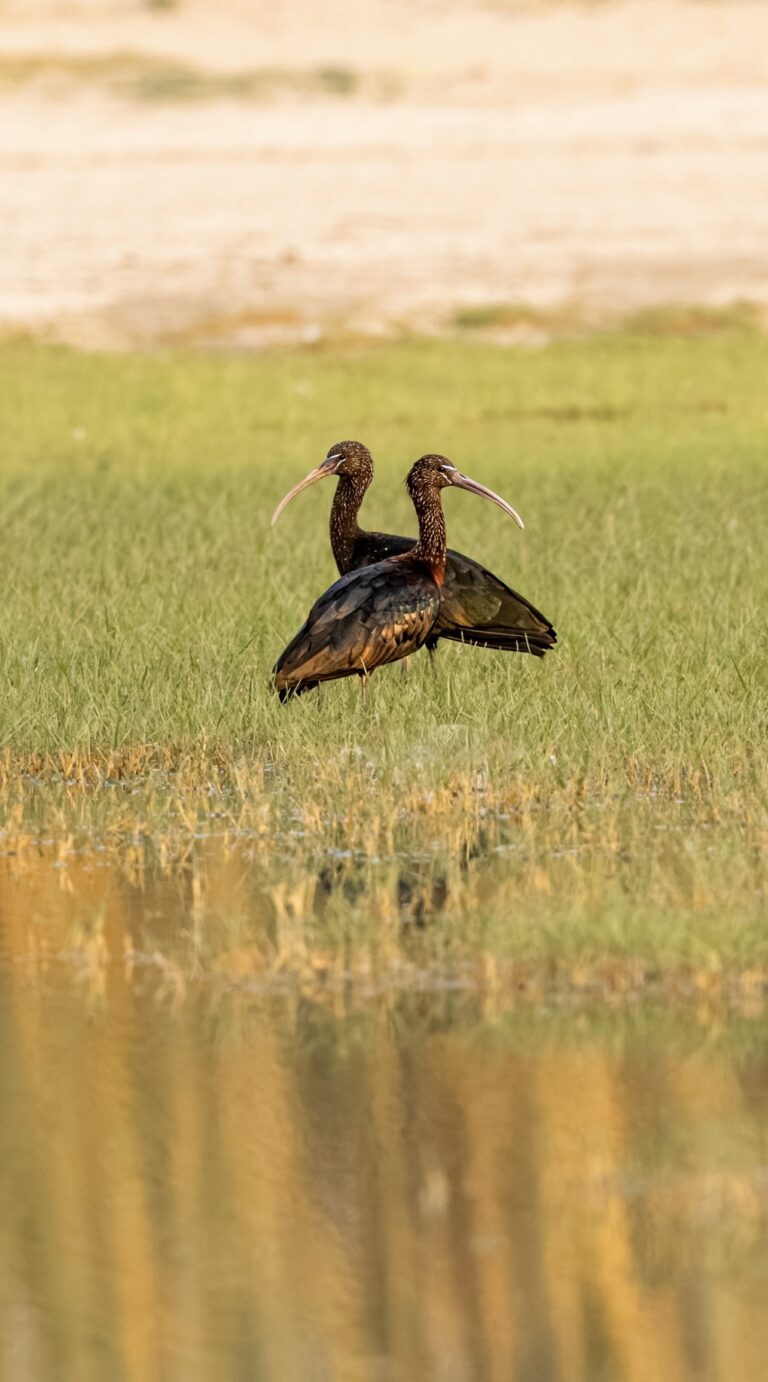
The Kuwait Environment Protection Society, through its Bird Monitoring and Protection Team, organized a field tour in line with this year's World Migratory Bird Day theme, "Every bird matters... your observations make a difference." This theme highlights the role of community science and observations by individuals and volunteer teams in collecting data that enhances scientific research and supports bird conservation decisions along migratory routes.
The field tour was in a number of areas of Kuwait Bay, where the association confirmed that “Kuwait Bay represents an important environmental stop for migratory birds during their seasonal journeys, as its areas include marine and coastal environments and mudflats that provide sites for rest and feeding. The Jahra Reserve also stands out as one of the important sites for migratory and resident birds and wildlife in the country.”.
The tour included Al-Jahra Reserve, Sulaibikhat Beach, Al-Khuwaisat, and West Doha. Ten team members participated, accompanied by the head of the Society's Bird Monitoring and Protection Team, Mohammed Shah. In this context, Team Leader Mohammed Shah commented: “Coinciding with World Migratory Bird Day, which the Society is keen to participate in annually, the eBird platform encourages all birdwatchers to go out on these two days to count and observe birds, and to record and send observation reports from around the world.” He emphasized that the eBird scientific platform is supervised by the Cornell Laboratory of Ornithology in the United States, and includes birdwatchers, researchers, and wildlife enthusiasts from all over the world. Its membership exceeds one million users worldwide, and its database reached more than two billion bird sightings in 2025.”.
Shah continued: “World Migratory Bird Day is very important for the bird monitoring and protection team, because the team organizes a group trip in which the team members” strong knowledge of birds is enhanced, and how to distinguish bird species from each other. Therefore, we go out into the field on these two days. On the first of May, we go to Kubbar Island where we monitor the terns that breed there, and in October we tour around Kuwait Bay.”.
He added: “The tours also aim to follow the movement of migratory birds and monitor their presence in coastal and wetland habitats, and to document field observations, which contributes to enhancing scientific knowledge of the species that pass through Kuwait and their migration routes, and supports efforts to preserve them and their natural habitats.” He noted, “In our tour this year, 10 members of the Society’s bird monitoring and protection team participated, in addition to the head of the Society’s photography and documentation team, Samira Al-Khalifa, and others from outside the Society.”.
For her part, the coordinator of the birdwatching events and trips, team member Athari Buhamad, confirmed that “the team leader tasked us with preparing and coordinating with the team members a week before the trip. The tasks and requirements of the trip were distributed among the participating members, and they were asked to be present at 6:00 AM at the gate of the Jahra Nature Reserve. I was also tasked with recording all bird sightings in all the observed areas on the eBird platform, which is the platform we primarily rely on for recording our bird observations.“ Athari Buhamad continued, “The Jahra Nature Reserve was the starting point for this trip, as the reserve attracts many migratory birds and is the most important destination for birdwatchers. We then moved to Khuwaisat and then to Sulaibikhat Beach, where we stopped for a short break while counting the birds present on the beach. After that, we headed to the Maternity Hospital beach and then to West Doha, as these areas are known for their high concentration of birds.”.
She stated: “At the end of the day, the data recorded on the platform, which numbered seven to six, was collected, and it was found that 69 types of birds were observed during the trip, which is six types less than last year for the same trip. Reports indicate that last year the team was able to observe 75 types, and the reason for this decrease is likely that we are still at the beginning of the autumn migration season.”.
She added, “What caught our attention was the large number of young black-crowned herons, 82 birds in total, all flying together over the reserve in the early morning.” Concluding the birdwatching field trips, the Kuwait Environment Protection Society emphasized “the importance of continuing regular monitoring and raising public awareness of the value of migratory birds and the necessity of preserving their habitats,” calling on “members of the community to support efforts to protect them and to refrain from disturbing them or damaging their gathering sites during migration seasons.”.