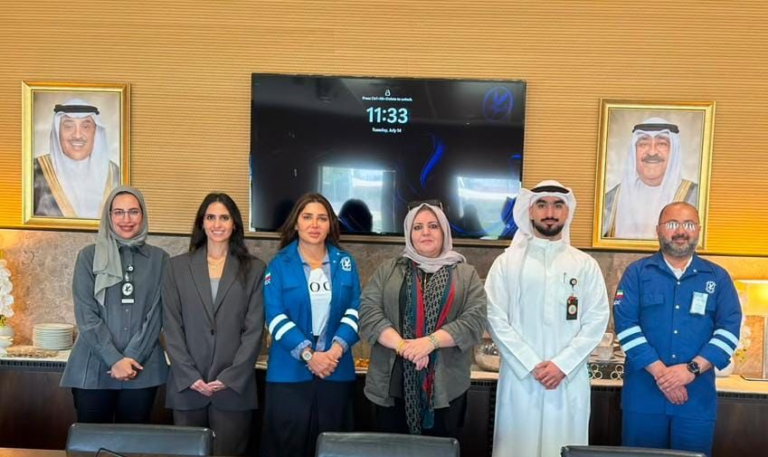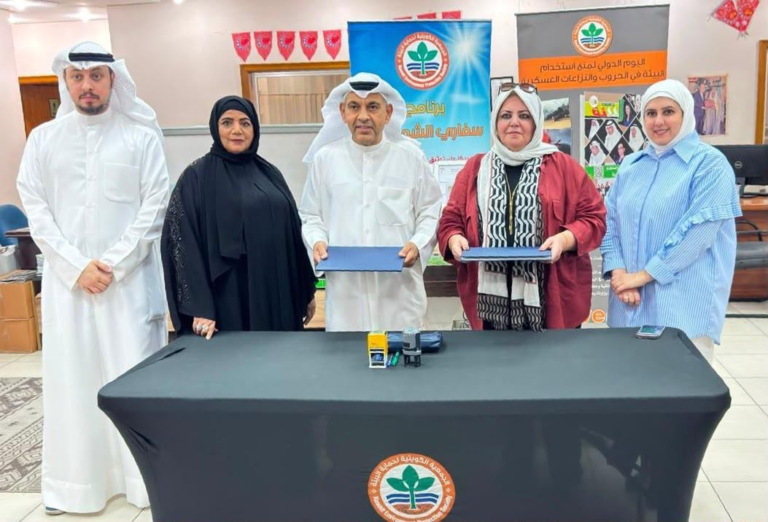
The Kuwait Environment Protection Society participated in the extensive scientific symposium organized by the Regional Organization for the Protection of the Marine Environment and moderated by its Executive Secretary, Dr. Jassim Bishara, at the headquarters of Sumaya Primary School for Girls in the Capital Educational District, entitled “Environmental Education and Upbringing,” on the occasion of the Regional Environment Day, among a group of environmental and educational bodies and institutions in the country.
During her scientific lecture, “The Society’s Role in Promoting Environmental Awareness and Education,” the Chairperson of the Board of Directors, Dr. Wajdan Al-Aqab, addressed the most prominent aspects of the Society’s program work in the field of environmental education, perhaps the most prominent of which is the “Green Schools” program. In this regard, she said: “The Society has developed this program as part of the environmental awareness programs that it implements in the schools of the Ministry of Education in the State of Kuwait, seeking through it to build the capacities of students and the teaching staff, the two pillars of the educational process, to think constructively and positively towards the environment, and to implement school activities and events to contribute to promoting the spirit of active citizenship that begins from the school, and to encourage environmental volunteer work in the school community, including students, teachers, administrators, and supervisors.” She pointed out that the Society has trained male and female teachers in the six governorates on climate change and global warming as two global issues affecting all fields.
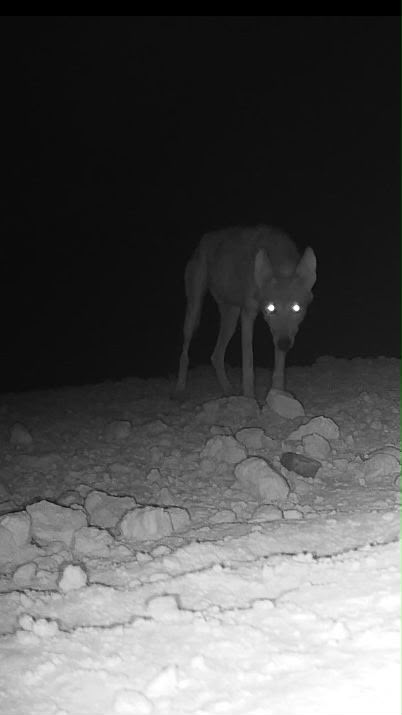
Dr. Al-Aqab pointed to the many interactive programs and plans offered by the Environment Society in the field of “environmental awareness and education,” including the Society’s role in establishing the foundation of environmental media, which the Society has distinguished itself in. Perhaps the most prominent of these is the documentary series documenting wildlife in the State of Kuwait, which excelled in producing its episodes, which were included in 8 seasons, and presented about 210 television episodes that enriched the visual environmental library in the State of Kuwait and strengthened the concepts of environmental awareness and education. She indicated that the series“ episodes were used in virtual education during the Corona pandemic, thanking ”the Kuwait Foundation for the Advancement of Sciences and the Environment Protection Fund for supporting the documentary programs with a portion of the production cost, which supported the Society’s budget in a way that contributed to achieving a distinguished environmental media production.” She also appreciated the Ministry of Information’s approach to publishing all the episodes over the years and repeatedly broadcasting them on Kuwait State Television channels as part of the environmental awareness system through a distinguished environmental media system.
She highlighted the role of environmental media in supporting educational and training plans in the country, reviewing the association’s contributions in this regard, explaining some of the association’s roles in the field of environmental awareness and education, and its keenness to launch the Environmental Document for Students and the “Empowering Youth” program for the Friends of the Environment team in the association, and the establishment of the educational garden for native plants in the State of Kuwait, which will serve as educational and training opportunities for students and those interested in Kuwait’s native plants.