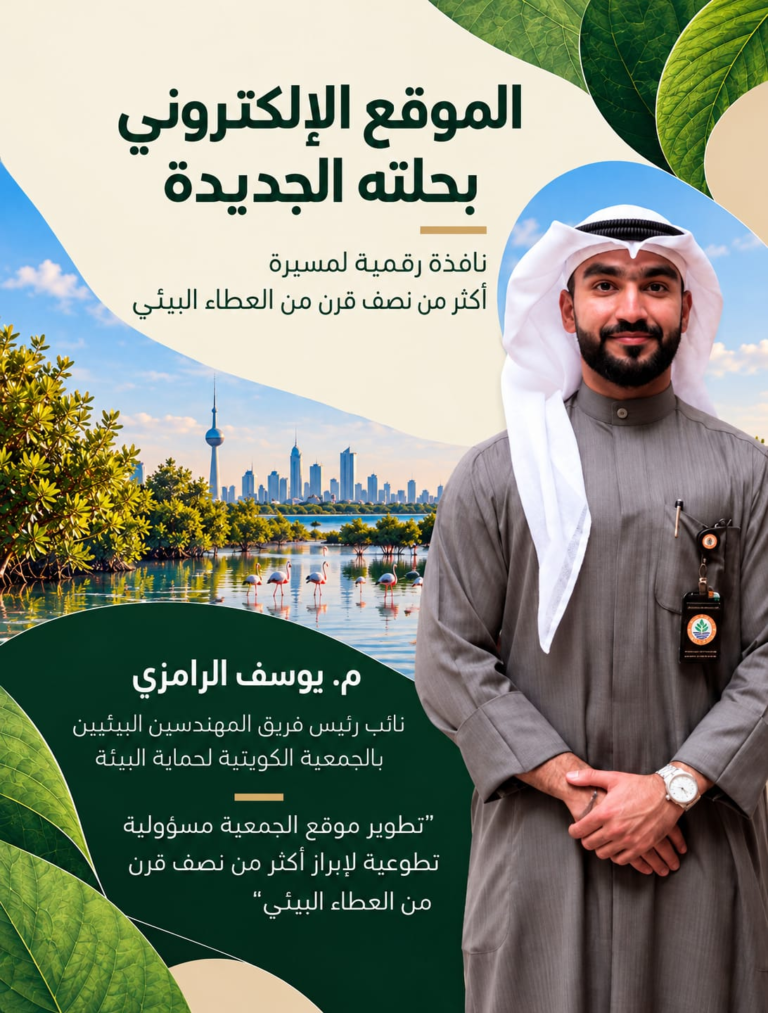
In response to what has been circulating recently on social media about the death of trees and the drying up of plants in the streets and the poor appearance of gardens and various government buildings, Nawaf Al-Muwail, a member of the Kuwait Environment Protection Society, said, “This sight is not hidden from anyone in Kuwait, and no day can pass without feeling the scorching summer heat after the beginning of the era of global boiling point, and the best cannot be expected in light of the rise in temperatures without adaptation plans.”.
Al-Muwail stressed: “The Gulf countries are among the regions most affected by climate change. The phenomenon of climate change in the world has become clear and evident to the world. It cannot be hidden or denied, even if opponents of this science bring evidence. However, the truth is in the rise in temperatures, the intensity of storms, the increase in drought, the rise in ocean acidity, and other events that have raced to the world in the past few years.”.
He explained, “Trees are essential as part of an integrated ecosystem and are often referred to as the “lungs” of the Earth because they are able to store carbon in the trees and soil and produce additional oxygen for our planet.” He added, “Trees also stabilize the soil and can reduce air temperature and humidity, as well as mitigate flooding and improve water quality. Trees play a vital role in increasing biodiversity in urban areas and providing natural habitats for plants, animals, and insects. Poor trees can be seen on streets and main roads, providing nesting grounds for birds and forming a natural habitat for them amidst the hustle and bustle of city buildings. In addition to their role in providing shade and beauty to areas and streets, a mature tree can absorb up to 150 kilograms of carbon dioxide annually and release oxygen in return.”.
Nawaf Al-Muwaile stated, “Agriculture plays an important role in maintaining temperatures and reducing the negative effects of climate change and global warming. Firstly, it stores organic carbon through the process of photosynthesis, where it absorbs carbon dioxide from the atmosphere and stores organic carbon in its upper parts, roots, and the soil as organic carbon reservoirs. This reduces the percentage of carbon dioxide in the atmosphere, which is a greenhouse gas.”.
Regarding the many solutions to the problems of drought, the deterioration of ornamental agriculture in the streets, and the poor management of public parks and neglected green spaces, Al-Muwail said, “Implementing sustainable agriculture approaches to achieve an environmental, economic, and social balance, and planting drought-resistant trees is one of the important strategies in facing the challenges related to climate change and water scarcity.”.
The member of the Environmental Society noted, “Achieving sustainable agriculture contributes to balancing human needs, protecting the environment, and preserving land and water resources for future generations. Developing and cultivating drought-resistant crops can also contribute to enhancing sustainability, controlling desertification, preserving water resources, preventing desertification, and maintaining soil fertility.”.
He added, “Sustainable agriculture also includes the use of resource management improvement techniques such as repeat cropping practices, efficient irrigation, and organic recycling of organic materials. These methods can increase land productivity and reduce agriculture’s impacts on the environment.”.
Nawaf Al-Muwail stated, “What the Kuwaiti citizen most desires is agricultural diversity in crops and plants, especially in public gardens and in basins designated for agriculture between streets within residential areas, instead of their desertification or being covered with artificial plants, which fall under the most important and largest pollutant of the environment, which is plastic and microplastic, in addition to being a refuge for insects and the biggest obstacle to water settling vertically and naturally in the soil layers.”.
Al-Muwail concluded, “We must not forget that water conservation is a key requirement in agriculture, and we must pay attention to irrigation systems and use water-saving technologies such as rainwater harvesting and the use of treated wastewater.“ He added, ”We must not overlook the role of the Kuwaiti farmer, who is distinguished by modern agricultural technologies, and we must invest in and support their efforts and knowledge in developing agricultural systems, especially in public gardens, neglected school areas, and street basins.”.