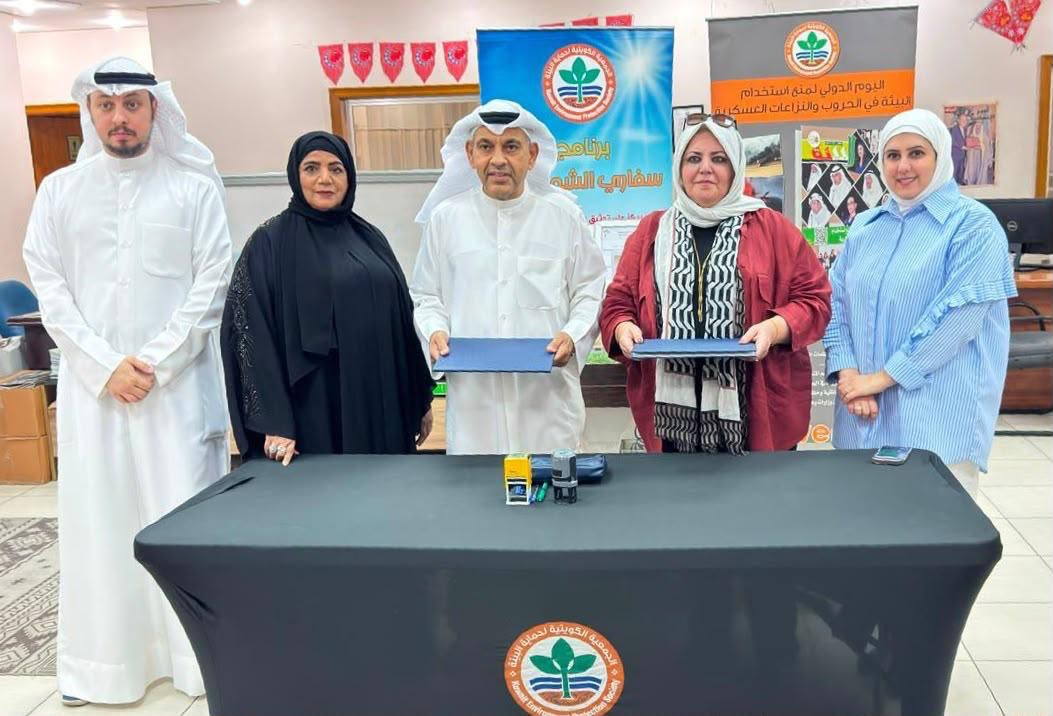
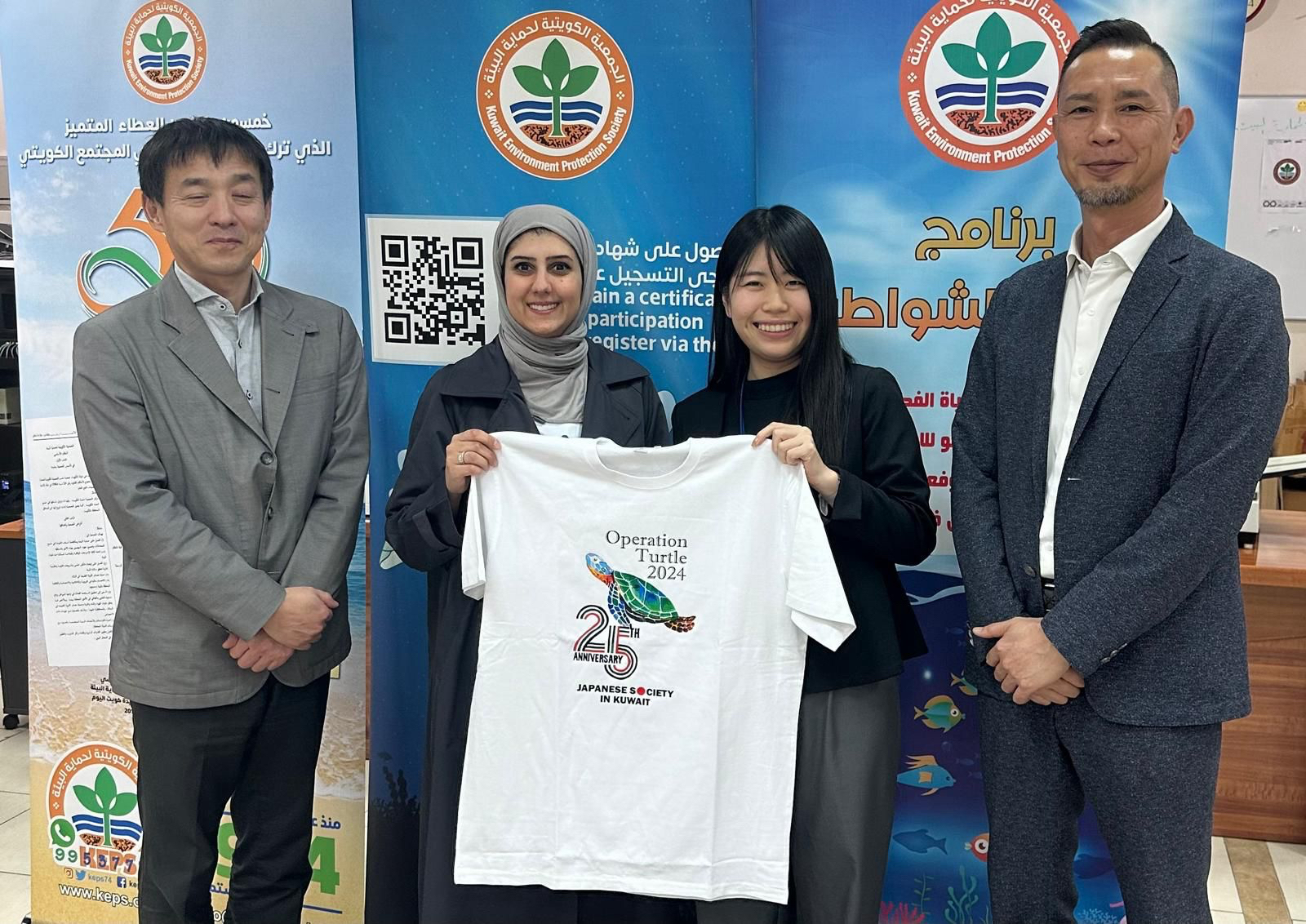
Janan Behzad, Secretary of the Kuwaiti Society for Environmental Protection, confirmed that “the visit of the embassy delegation and the Japanese Society to the Society was for the purpose of coordinating and preparing for the 25th season of the “Sea Turtles” operation to clean the Kuwait Towers beach, during this month, which is organized by the Society in cooperation with the embassy, the Japanese Society, the Environment Public Authority, and with the participation of many government agencies, civil organizations, and students of schools included in the “Green Schools” program in its 14th session for the current academic year.”.
Behzad noted that “the Japanese delegation included Yoichi Noda – Chief Operating Officer, Ayana Hashizumi – Second Secretary for Economic and Commercial Affairs, and Mikako Nemoto – Research Consultant in the Economic Department,“ adding that “the organization of the campaign, although symbolic, conveys the message to everyone about the importance of preserving environmental resources and their cleanliness.”.
She stated that “the Sea Turtle Campaign highlights these unique and endangered marine creatures that live in Kuwaiti waters and play an important role in maintaining the ecological balance in the sea. Kuwait is home to several types of sea turtles, most notably the green turtle and the hawksbill turtle. These turtles live in the waters of the Arabian Gulf where they are found in areas of coral reefs, seagrass beds, and shallow coastal waters.”.
She pointed out that “green turtles are among the most widespread sea turtles in the Arabian Gulf, and they feed mainly on seagrass, which contributes to maintaining the health of the marine ecosystem. These turtles live in areas close to the coasts and are considered a threatened species due to hunting and pollution.“ She added, ”Kuwait has given special attention to protecting sea turtles and their nests, represented by the Environment Public Authority and volunteer teams, including the Sea Turtle Team at the Kuwaiti Society for Environmental Protection, especially on Qaruh Island, which is considered one of the main nesting sites for turtles. Protection efforts include several measures, such as monitoring the beaches where turtles lay their eggs, raising awareness among visitors and fishermen about the importance of preserving nests, and prohibiting activities that affect turtle habitats, such as excessive lighting, which may disorient hatchlings and hinder their access to the sea.”.
Behzad explained that “efforts to protect sea turtles include regular beach clean-up campaigns to remove waste, especially plastic, which poses a significant threat to sea turtles. In addition, protected natural areas are designated for sea turtles, where human activities that could harm the turtles and their nests are prohibited.” She also highlighted “Article 100 of Kuwait’s Environmental Protection Law, which stipulates penalties and fines for individuals or entities that violate environmental protection laws, particularly those related to damaging ecosystems or harming wildlife and plants. The law aims to protect natural resources and promote their sustainability, and includes penalties that may include fines or imprisonment, depending on the severity of the violation and its impact on the environment.”.