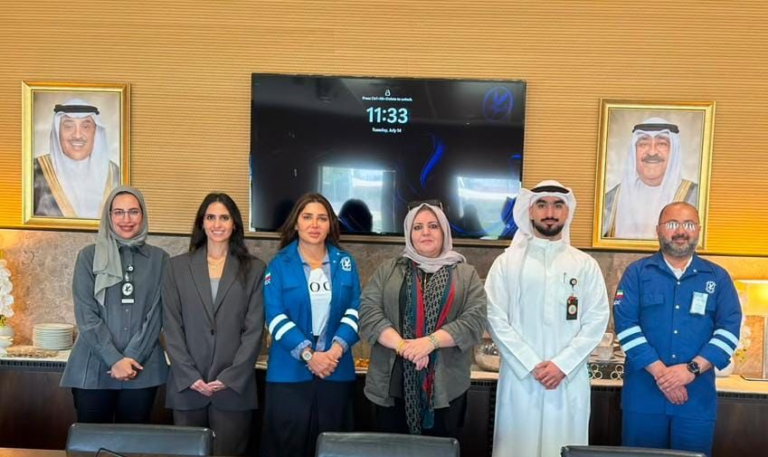
The Arab Open University, in cooperation with the Kuwait Environment Protection Society, organized an awareness and motivational lecture on “Electronic Waste Management” for fifty male and female students as part of its efforts to promote and disseminate environmental knowledge and culture among students in institutes and universities. […]
In this regard, Dr. Mohamed El-Sayed, Director of the Arab Open University, affirmed that “the lecture comes as a continuation of the environmental cooperation mechanism between the association and the university through a series of events that include lectures, workshops and dialogue sessions that promote environmental dissemination among students to increase environmental awareness and encourage the adoption of sustainable practices among students and the community.”.
He noted “the utmost importance that the university attaches to supporting students” cognitive orientations towards social responsibility included in the self-learning and extracurricular education patterns adopted by the Kuwait Environment Protection Society in its student activities,“ praising the topic of the lecture and workshop on electronic waste, ”that issue of health and environmental sensitivity and its economic returns if it is dealt with according to advanced technologies,” commending the ongoing participation and cooperation between the university and the Environment Society.
For her part, the Secretary-General of the Kuwait Environment Protection Society, and Director of Programs and Activities, Jenan Behzad, presented the motivational awareness lecture at the Arab Open University, addressing “Challenges and Opportunities in Electronic Waste Management.” She explained that “the lecture highlighted important facts about the increasing global electronic waste, pointing out that “53.6 million tons” of this waste were produced in 2019 alone, with an expected growth of 21% during the coming years.” She emphasized that the recycling rate of this waste does not exceed 17.4%, which increases the seriousness of its impact on the environment and public health.
She stated that she addressed “the most prominent reasons for the worsening problem of electronic waste, the most important of which are rapid technological development, which drives consumers to dispose of old devices frequently, as well as the culture of excessive consumption, weak awareness of the importance of recycling, the absence of organized recycling programs, and the lack of suitable infrastructure to deal with this waste.”.
Behzad explained “the importance of adopting sustainable solutions that include raising environmental awareness, supporting policies that promote the circular economy, and improving recycling systems,” concluding the lecture with a rich discussion session in which the attendees shared their opinions and perceptions about the role of society and institutions in addressing this problem, which added a positive and fruitful interaction to the event.