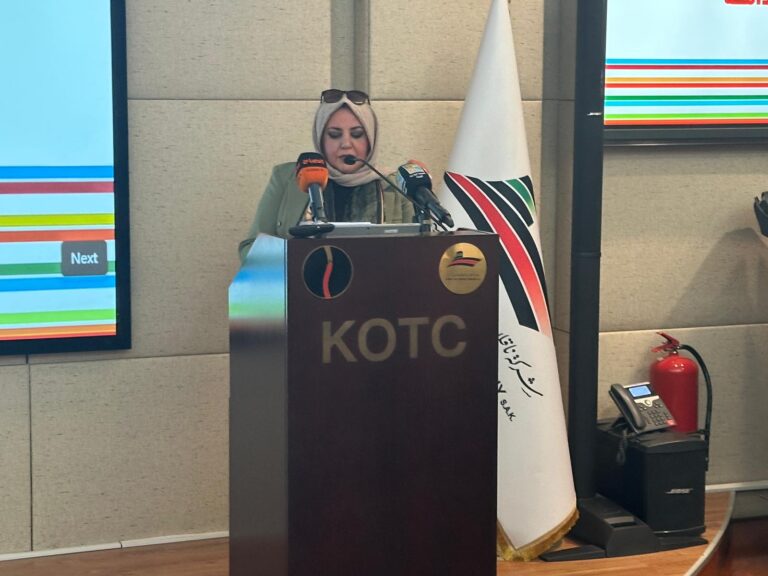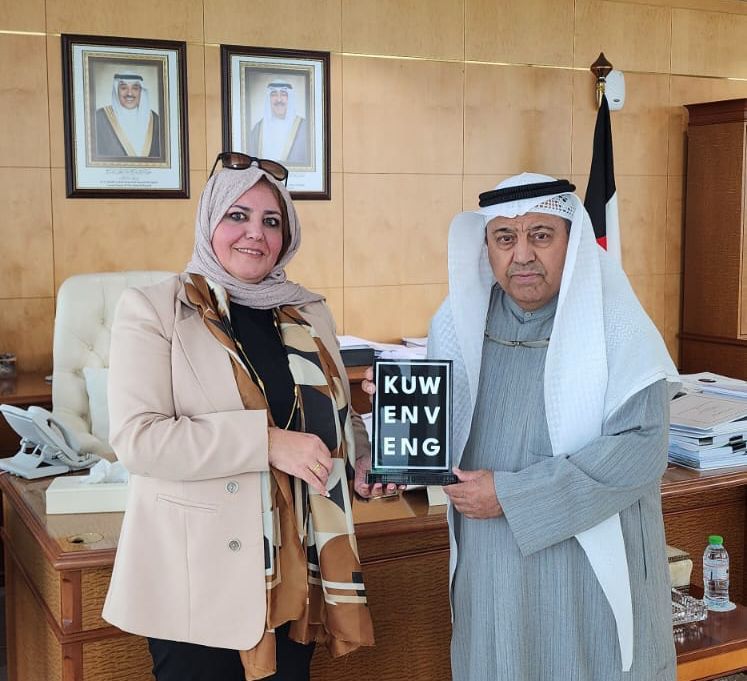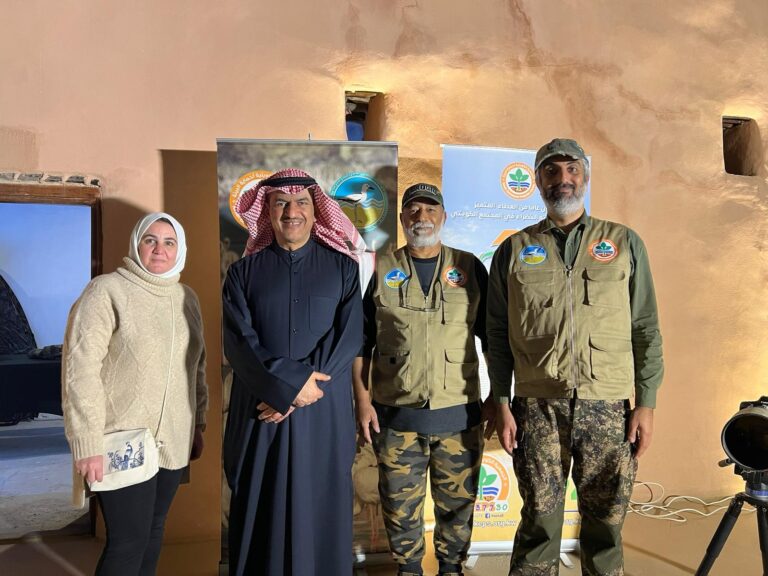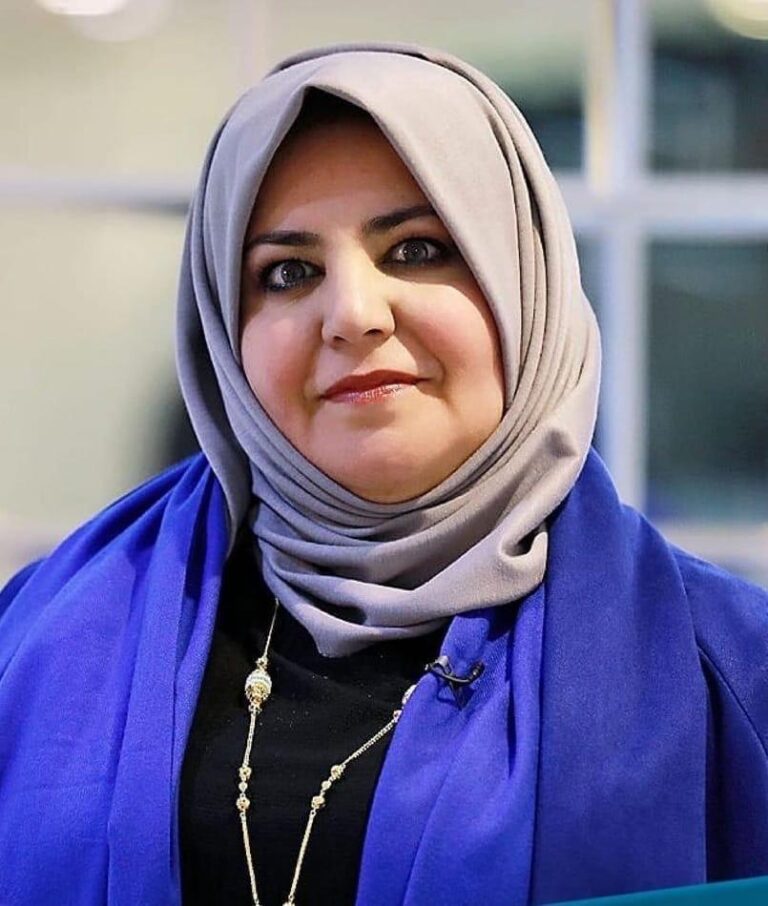
Dr. Wajdan Al-Aqab, President of the Kuwait Environment Protection Society, noted that governments and citizens of 190 countries around the world are celebrating Earth Day remotely today, Wednesday, April 22nd, to raise awareness about the importance of preserving planet Earth for the well-being of people and the flourishing of environments. She emphasized that the theme for Earth Day 2020 is "Biodiversity and Humanity," adding that the Society has presented numerous programs and activities related to biodiversity. Among the most prominent is its distinguished series of television programs documenting wildlife in Kuwait, including "A Bird Every Day," "A Plant Every Day," "A Fish Every Day," "A Journey Every Day," and "A Camping Trip Every Day," with the sixth season being "A Camping Trip on the Border." The Society also organizes awareness programs targeting all age groups, especially children and youth. She further mentioned the recent launch, in cooperation with the Ministry of Interior, of the "Monitoring and Documentation of Wildlife in Kuwait's Border Areas" program, expressing her gratitude to the Ministry of Interior, particularly the Border Security Sector.
Dr. Al-Aqab added basic information about the main terrestrial reserve in the State of Kuwait, which is the demilitarized zone between the State of Kuwait and the Republic of Iraq. The main reserve was effectively protected in April of 1991 in accordance with Security Council Resolution No. 689 of 1991.
The area, which was the focus of the television program "Everyday Camping on the Border," constitutes an essential part of Kuwait's natural capital. It is characterized by its diverse terrain and rich biodiversity. The area stretches along the border between the two countries for approximately 200 km, with an average width of 5 km. The total area of this reserve is 1009 square kilometers (approximately 61 TP3T of Kuwait), making it three times the size of the Sabah Al-Ahmad Nature Reserve. According to UN Security Council Resolution 1490 of 2003, it became a restricted area, not a demilitarized zone, and has remained a protected area for nearly 29 years.
For his part, Professor Dr. Raafat Fahmy Misak, a member of the Wildlife Protection Committee at the Society, said that “Sustainable Development Goal 15 (Life on Land) focuses on protecting, restoring, and promoting the sustainable use of terrestrial ecosystems, as well as the sustainable management of forests, halting and reversing land degradation, and halting biodiversity loss.” He added, ”It is important to focus on the last part of Goal 15, which is halting biodiversity loss. Here, it should be noted that sustainable land use constitutes the first line of defense for protecting and then developing biodiversity. Examples of this type of use include the qualitative shift from traditional grazing to environmentally friendly sustainable grazing after assessing the grazing load and determining the most suitable time for grazing. He also pointed out some patterns of unsustainable land use, which are harmful to the Kuwaiti environment, such as the movement of four-wheel drive vehicles over sand dunes for recreational purposes, early grazing before the vegetation has flowered, overgrazing, and the construction of earthen berms around nature reserves and sheep pens for protection.”.
Dr. Misak explained that biodiversity occupies a common space in the three Rio Conventions (the United Nations Convention to Combat Desertification in Countries Affected by Severe Drought and Desertification, the Convention on Biological Diversity, and the United Nations Framework Convention on Climate Change), which the State of Kuwait signed and ratified in the 1990s. He added, ”It is important to point out that diversity in general includes physical diversity, which represents the basis upon which biodiversity is formed. For the State of Kuwait, this includes diversity in land features, surface deposits, and soils, while biological diversity primarily includes diversity in plants and animals.“.
Dr. Raafat Misak confirmed that the ecosystems linked to land uses geographically and politically include the border trench, the electrical fence, and the outer trench of the demilitarized zone, or what is currently called the prohibited zone. He pointed out that “the most widespread plant in the region is the saltbush, which occupies no less than 85% of the area and thrives in Wadi Al-Batin (Al-Salmi - Al-Shaqaya - Markaz Al-Taawun and Al-Abraq) and Khubari Al-Awazem and the valleys extending between Al-Ratqa and Al-Abdali, the most important of which are Umm Sudairah and Al-Sakhibiri. It also thrives in the wild part of Markaz Al-Bahith.“ He noted that ”a great variation was observed in the size, height, and density of the plant and the number of wild animals that live in its shade and under its dunes. The dunes are the hills and sand dunes that are formed by plants. The saltbush has the ability to trap and stabilize sand. This variation is explained by the great difference in local conditions. For example, the saltbush that grows in clay soil containing between 5 and 8% of organic matter is more robust and more tolerant of harsh conditions.” Furthermore, the tamarisk that retains larger quantities of flood sediments is in better condition, due to the organic materials and soil conditioners that those sediments contain.