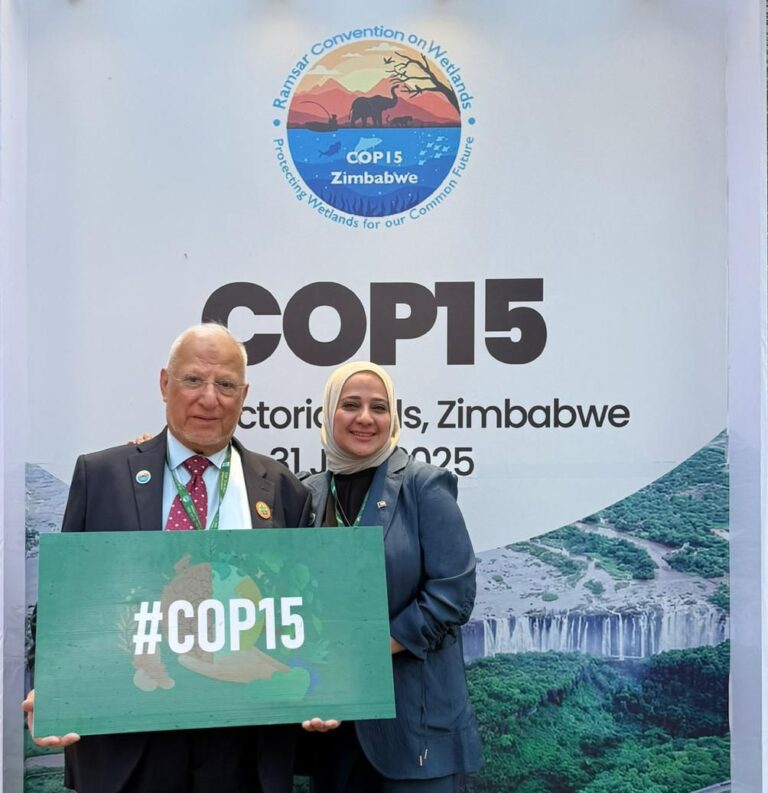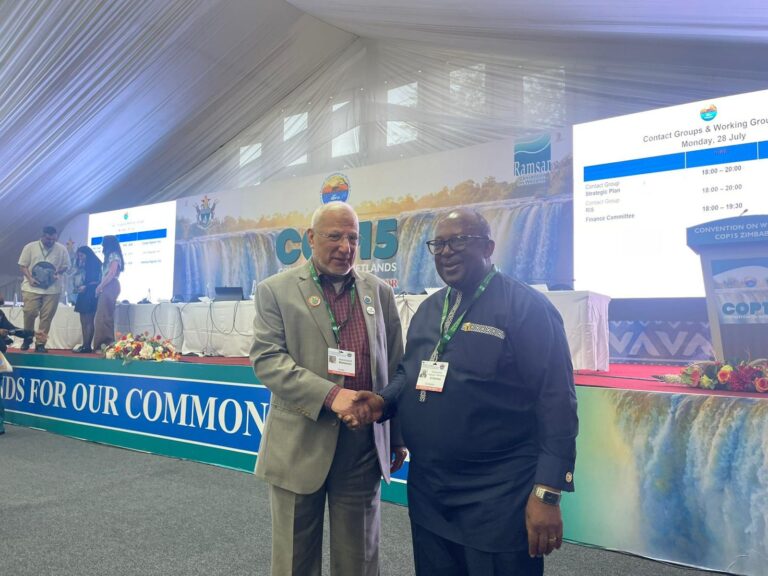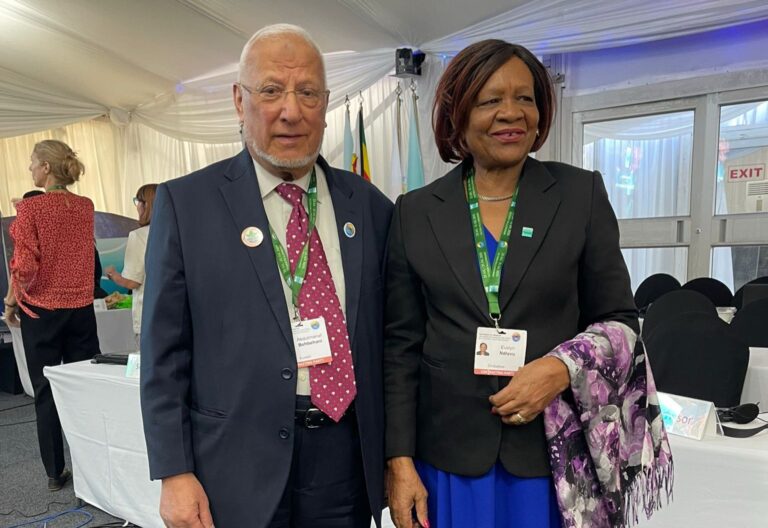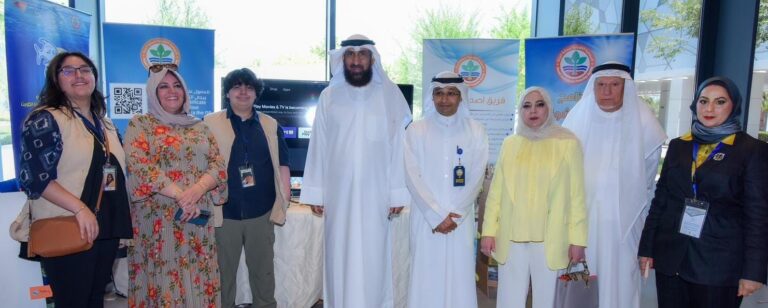
The Kuwait Environment Protection Society participated in the opening ceremony of the fifteenth Conference of States Parties to the Ramsar Convention on Wetlands, currently being held in the Republic of Zimbabwe and extending until July 31, 2025. The opening ceremony was attended by His Excellency Dr. Emmerson Mnangagwa, President of the Republic of Zimbabwe, the Vice President of the Republic, and senior representatives of neighboring African countries, in addition to the presence of a large number of representatives of agreements related to environmental protection and United Nations organizations, as well as representatives of the member states of the Convention, including the State of Kuwait.
The association noted that “despite the weak support allocated to such international participations and its frequent absence, the association’s members are keen to participate and represent the State of Kuwait in the best possible way, sharing their accumulated academic and field experiences over the years. This is a characteristic of those affiliated with volunteer work in Kuwaiti civil society institutions. The association’s delegation to the meeting was headed by Dr. Manaf Behbehani, Chairman of the Wildlife Protection Committee, and Dr. Wafaa Behbehani, a member of the association, who was sent by the Public Authority for Agricultural Affairs and Fish Resources to participate in the meeting as representatives of the association.”.
Dr. Munaf Behbehani, Chairman of the Wildlife Protection Committee of the Environment Society and its representative at the meeting, stated in a press release that ”the global wetland outlook issued by the Ramsar Convention Secretariat, which aims to conserve and promote the conservation and wise use of wetlands of international importance, confirms a decrease in the area of wetlands in the world for which data is available by 351 TP3T since 1970, the year the Convention was signed.” He pointed out that “the mission of the Convention is to conserve and wisely use all wetlands through local and national actions and international cooperation, as a contribution towards achieving sustainable development worldwide.”.
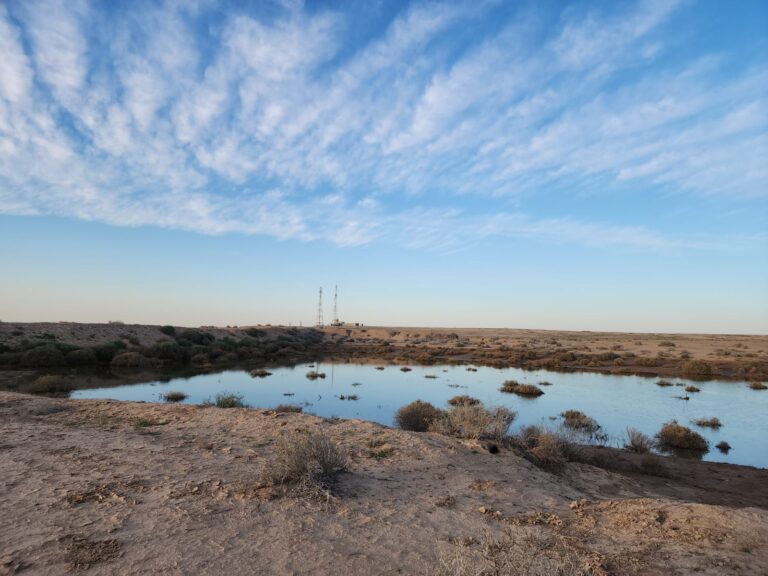
Dr. Behbahani stated that “wetlands are among the most diverse and productive ecosystems, providing essential services such as tourism and serving as a source of fresh water. However, we are witnessing the continuous degradation and loss of these lands and their conversion to other uses.” He noted that “the Convention adopted a comprehensive definition of wetlands that includes all lakes and rivers, groundwater, ponds and marshes, wet grasslands, oases, estuaries, deltas and tidal flats, mangrove forests and other coastal areas, coral reefs, and all artificial sites such as fishponds, rice paddies, reservoirs and salt marshes.”.
He warned of “a decline in natural wetlands at a rate of 0.78% per year, which is much higher than the rate of natural deforestation, as projections indicate that the quality of the remaining wetlands is also suffering due to drainage, pollution, invasive species, unsustainable use, disturbed flow systems and climate change, as there is an international warning that the quality of the remaining wetlands is also suffering due to drainage, pollution, invasive species, unsustainable use, disturbed flow systems and climate change.”.
He stressed that the fifteenth meeting of the Conference of the Contracting Parties to the Ramsar Convention on Wetlands, currently being held in Victoria Falls, Zimbabwe, falls within the framework of international strategic solutions for the protection of remaining important wetlands, and that promoting wetland restoration is not only an important measure to mitigate climate change, but also contributes to preventing flood damage, which tends to increase in magnitude, by utilizing and expanding the capacity to absorb and retain natural water.
Dr. Manaf Behbehani concluded by saying, “Perhaps the preservation and restoration of wetlands is the “optimal use” of them and is consistent with what the Ramsar Convention calls for. Moreover, the proactive use of international frameworks such as the Ramsar Convention and the expansion of wetland-enriched solutions as an influential pillar has the potential to be a very effective measure for the climate change crisis and its associated challenges and risks.”.