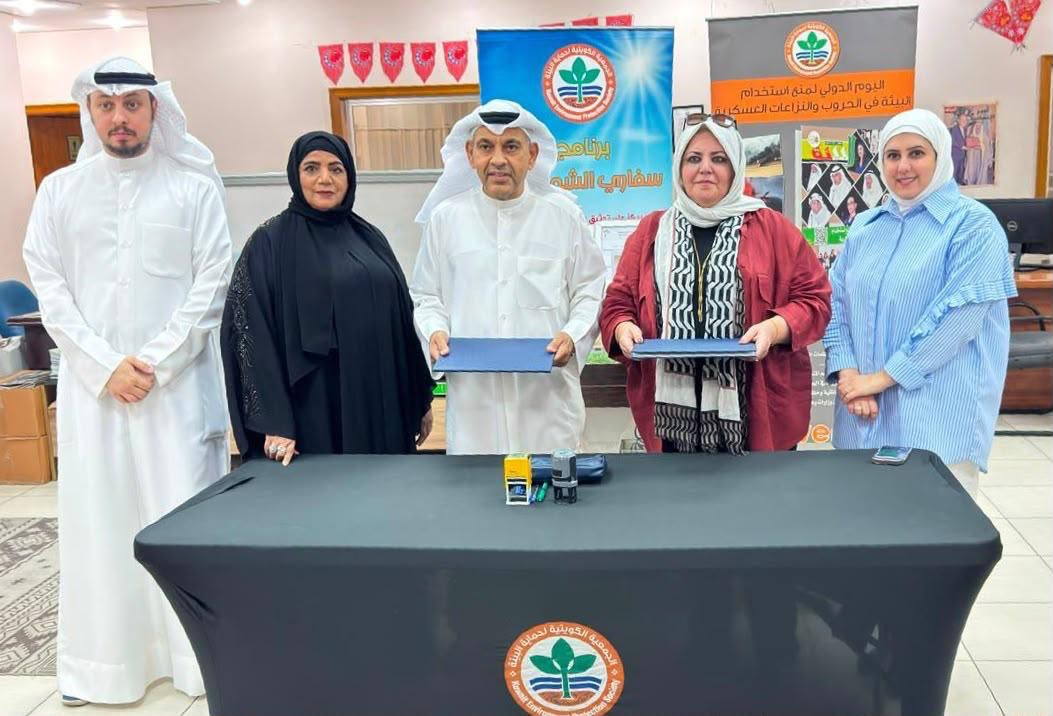
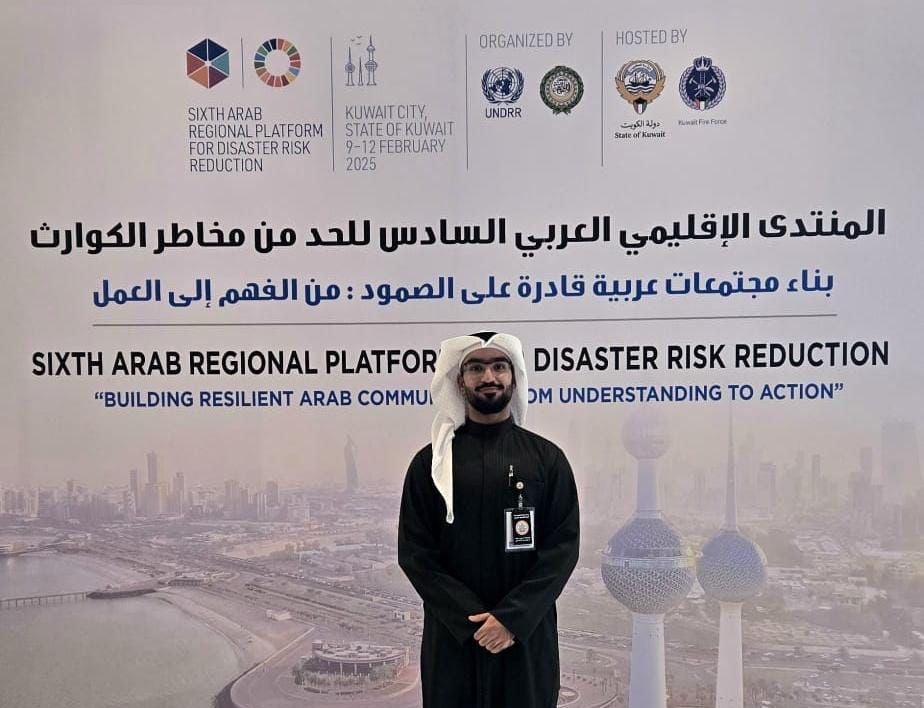
The Kuwaiti Society for Environmental Protection stressed “the importance of building partnerships and exchanging experiences with stakeholders to confront natural and human risks.” This came in a statement by Dr. Wajdan Al-Aqab, President of the Society, during her participation in the activities of the “Sixth Arab Regional Forum for Disaster Risk Reduction” held in Kuwait under the slogan “Building Resilient Arab Societies: From Understanding to Action.” The forum is organized by the General Fire Force in cooperation between the United Nations Regional Office for Arab States for Disaster Risk Reduction and the League of Arab States, under the patronage of the First Deputy Prime Minister and Minister of Interior, Sheikh Fahd Yousef Al-Saud Al-Sabah.
Dr. Wajdan Al-Aqab praised the State of Kuwait for hosting this international forum, which includes Arab and international experts, government representatives, and heads of international and regional organizations. She commended the First Deputy Prime Minister for sponsoring the forum, reflecting the State’s interest in supporting and strengthening its international efforts in the field of disaster risk reduction.
In the same context, members of the association attended several sessions within the forum. Engineer Youssef Al-Ramzi, Vice President of the Environmental Engineers Team in the association and the official spokesperson, made an intervention during his participation in a session dedicated to civil society organizations. In this session, the United Nations Disaster Risk Reduction Programme (UNDRR) presented its newly developed platform, the “Stakeholder Engagement Mechanism,” a platform for bringing together civil society organizations from around the world. Al-Ramzi commented that the new “Stakeholder Engagement Mechanism” is a prominent platform that reflects the commitment of Arab countries to strengthening cooperation to confront the increasing challenges associated with natural and man-made hazards. He pointed out its alignment with what was presented by the Partnerships Building Officer at the UNDRR Regional Office for the Arab States, Tejas Patinak, regarding the importance of developing plans with voluntary commitments for each stakeholder group, in addition to future visions for these groups, in order to support their work and partnerships.
M. Al-Ramzi explained that “civil society organizations had an opinion that required clarification of the process, especially since this platform reviewed the registration but did not review how stakeholders were distributed in the groups for the main groups, which were identified as no less than 17 groups, including public benefit associations, youth, children, women, science, media, farmers, and others, which is what the civil society organizations present at the conference agreed upon.”.